Parental factors
Accessible and available facilities to a child begin from the intrauterine period itself. The first domain describes the factors related to parents. All the identified properties (items) in the parental domain are either endowed or decided by parents. Participants are of the opinion that “parent’s occupation decides the socioeconomic level of a child. Father is the main breadwinner of the family. If the father and mother are government servants, their children belong to upper class…. People also consider the land assets to assess the socioeconomic background of an individual.”
Permanent source of income for either or both of the parents (having any kind of monthly monetary benefits from the job which will continue until their death, even after the completion of their formal employment period), whether they are working in private or government sector, job position, parent’s education, total area of land (on an average) possessed, the caste they belong to and the place of living during their childhood (urban/rural) are the major properties (items) under the parental domain.
“
Most of the upper-class children belong to ‘upper’ caste. Muslims are poor. Thenumber of kids in the upper-class family will be less. 2 or 3 kids. But a number of kids in the lower family will be huge in number. Eight or nine.”
“Most families, the male member is the breadwinner. Only a few families have female breadwinners. Financial dependence was very common among the households. Male member will decide the allocation of financial resources and find the way to satisfy both major and minor financial needs of the family members.”
Gender
Gender of a child is one of the important domains to measure childhood SEP. It decides the allocation of resources within a household. It decides the facilities available to a child during the childhood period. Parents are more likely to spend more money for the higher education of a boy. Parents invest more money for a girl child’s marriage instead of her education. A girl child in a poor family should learn all the household activities from her childhood period. But a boy child has the freedom to play outside, making more friendships and very limited restrictions to wander and enjoy the social ceremonies during the growing period. Gender is the second domain to measure the childhood SEP.
“Our society gave more freedom to a boy child when compared to a girl child. A poor girl child learns all kinds of household activities especially brooming, mopping the floor, washing clothes, and preparing fish etc. It is considered as an offence by the parents if their boy child is doing all the above-mentioned household activities. Girl child always shows the hospitality and caring attitude towards the male members and elderly members of the family. Boy child always shows endowed behaviors of masculinity. They can roam anywhere in the neighbourhood. They can attend ‘pooram’ (a social celebration attached to a temple) or ‘perunnal’ (a social celebration attached to the church) etc. Family members encourage and accept that very much.”
“…middle-class employed parents always think about the marriage of a girl child from her infant period itself. One of my friends stopped using cigars after the birth of the daughter to save money for her marriage. At the same time, he took an educational loan for his son for the higher education. He always said that daughter will go from the family to someone’s kitchen. But a son will always be with parents in their elder period and will get something to drink or eat to us till death.”
Schooling factors
The third domain constitutes the factors related to the education acquired from school. Since it is a strong influence on the CSEP, it carries nearly 6 items. Type of the school in which the participant studied (government/aided/unaided), method of commuting to school (by walk, by school bus, by private vehicle and by own vehicle), medium of instruction in the school (English or Malayalam), enrollment in the school meal program and opportunities for higher education after 10th standard (if they completed 10th standard) are included in the factors related to schooling. Poor children have the school meal as their major food in a day.
“…Children from the employed parents prefer the unaided. English medium schools. They arrange school buses or other private vehicles as a method of commuting to school. Most of them have home tuitions. Poor children are going to school for getting the one time meal as part of school meal program. So they have an opportunity to take full meal at least once in a day…. Upper class parents sent their children to the institution with all amenities, which was situated in the cities. They can meet the hostel expenses of their children. They gave more preference to a good job.”
Childhood food
The fourth domain is related to childhood meal related factors. There is reasonably large amount of food eaten in a regular occasion of a usual childhood day. Even though the participant’s household had typical Kerala style breakfast food like idli, dosa or puttu, this domain includes both the frequency of meals in a day and the use of sugar in the household. Having full meals thrice in a day indicated that the household is well off.
“…rich households have puttu, idly or dosa as breakfast. Poor children consider special breakfast as a luxury. Rich children got training in in-door games in those days.”
Childhood play
Fifth domain is childhood play related characteristics. The frequency of indoor games as well as the frequency of outdoor games in a week comes under the childhood play related factors. Financially well-off parents allow their children to play indoor games while poor and middle-class children play outdoor games usually.
“We were playing thalapanthu kali and panthukali after completing our school periods, Boys from financially well off family had strong intention to play with us, but their parents didn’t like that. Parents of my friends are college lecturers. They trained and allowed him to play chess, and badminton. So most of the students from the elite families were likely to play indoor games.”
Household factors
The sixth domain is household-related factors. It is mainly related to the accessibility to home appliances, household facilities, and non-financial household assets. Household facilities include the presence of full time or part time domestic help. The non-financial household asset includes the roof of the house viz. thatched, tiled, concrete or mixed, the type of kitchen utensils used viz. steel, copper, bronze and aluminum (having steel utensils was considered luxury), and access to the vehicle (registered vehicle owned by their parents or other family members). The ownership of the household electric appliances like television, radio, refrigerator and land phone is included in the accessibility of home appliances related question.
“Radio, was a luxury electric appliance in rural areas. Having bicycle was a big thing. I went to my uncle’s house, which located in city. I saw a black and white television in that house. Uncle was an assistant manager in a bank. His bank quarters was a concrete one. It was a two stored house.”
Use of health care facilities
The last domain includes the factors related to the use of health care. It includes the history of sibling’s death (indicating the poor status of household), history of home delivery of participant’s mother, immunization to the self and siblings and the type of health care facility (either government or private) used during the time of childhood ailments. Home delivery was rare in the upper-class households. Recurrent infections for the children and child death were very common in poor households in that period (See Figure 2).
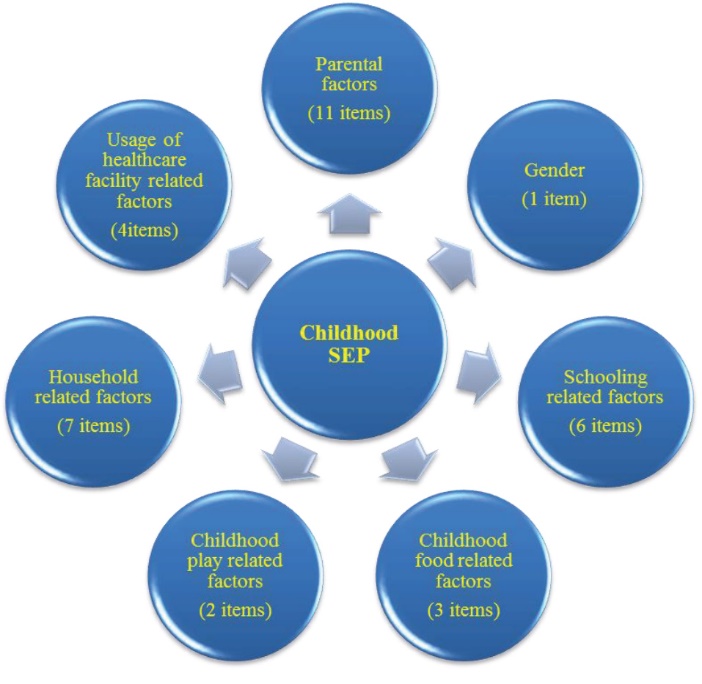
Figure 2. Domains of childhood socioeconomic position.
“Death of children with unknown causes was very usual among the poor households. Still birth was very common. Rich households always preferred English (Allopathic) medicine to cure their illness. Government health system for the poor patients.”
The textual analysis of the transcripts of in-depth interview extracted a list of 42 items. These 42 items were distributed under 7 domains.
Content validity
By discarding those items of the questionnaire that were less related to the childhood SEP, the number of items decreased from 42 to 28. A 28-item questionnaire was there for validation analysis, after a cautious rejection of 14 items.
Reliability - Internal consistency
The values of α and stratified α were 0.89 and 0.85, respectively. The value of α did not vary significantly with the elimination of any item. A detailed analysis of each item is shown in Table 2. This table consists of the items, with the corrected item to total correlation value >0.3. After doing the reliability analysis, the items reduced to 23 items questionnaire under 3 domains.
| Table 2. Reliability assessment: Item to total correlation of child hood SEP questionnaire |
| |
Variables
|
Crohnbach’s alpha value if one Item deleted
|
|
D1
|
Parental Occupation
|
|
| 1 |
Permanent income for father |
0.67 |
| 2 |
Category of father’s job– Private/Government |
0.51 |
| 3 |
Occupation of father |
0.81 |
| 4 |
Permanent income for mother |
0.67 |
| 5 |
Category of mother’s job – Private/Government |
0.60 |
| 6 |
Occupation of mother |
0.72 |
|
D 2
|
Parental Education
|
|
| 7 |
Education of father |
0.80 |
| 8 |
Education of mother |
0.83 |
|
D 3
|
Schooling
|
|
| 9 |
Medium of instruction at school |
0.70 |
| 10 |
Enrolment in the school meal program |
-0.58 |
| 11 |
Method of commuting to school |
0.74 |
|
D 4
|
Household Assets
|
|
| 12 |
Having fulltime domestic help |
0.53 |
| 13 |
Electronic appliances |
0.77 |
| 14 |
Type of utensils |
0.51 |
| 15 |
Having access to vehicles |
0.59 |
| 16 |
Roof of the house |
0.80 |
|
Note: Alpha value (Kline’s value) is >0.50 for the sample size 200. Now it is 16 variables distributed across 4 domains.
|
Construct validity
The Kaiser-Meyer-Olkin (KMO) measure of the sampling adequacy was found to be 0.82, and Bartlett’s test concluded that the hypothesis of sphericity could be rejected (P < 0.05). Three factors are explaining 55% of the variance in the analysis (Table 3). After doing the factor analysis, we had an 11-item questionnaire to measure the CSEP. The name of the domains is renamed after observing the characteristics of variables under each factor.
| Table 3. Exploratory factor analysis: Result for childhood SEP questionnaire |
|
Items
|
Name of the domain
|
Factor 1
|
Factor 2
|
Factor 3
|
| Electric appliances |
Value added through paternity |
0.797 |
|
|
| Roof of the house |
Value added through paternity |
0.754 |
|
|
| Category of Father occupation |
Value added through paternity |
0.681 |
|
|
| Type of utensils |
Value added through paternity |
0.673 |
|
|
| Vehicle ownership |
Value added through paternity |
0.606 |
|
|
| Method of commuting to school |
Value added through paternity |
0.603 |
|
|
| Enrolment in School meal program |
Value added through paternity |
-0.553 |
|
|
| Had full time domestic help in the home |
Value added through paternity |
0.526 |
|
|
| Medium of learning in children’s school |
Value added through paternity |
0.449 |
|
|
| Mother – nature of the job |
Maternal occupation |
|
0.987 |
|
| Mother occupation categories |
Maternal occupation |
|
0.825 |
|
| Mother education |
Parental education |
|
|
0.849 |
| Father education |
Parental education |
|
|
0.755 |
| Extraction method: Maximum likelihood method with direct oblimin rotation. Loadings of the rotation matrix presented. |
The mean score of childhood SEP questionnaire in this population, in which it was developed, is 24.88 (+9.18) and ranging from 0 to 43.
Description of the questionnaire
This is a self-administered questionnaire developed in the local language of Kerala (Malayalam) and aimed to use in noncommunicable disease epidemiological research. Responses of the questions in a mixed format. It included both yes/no and multiple choices. We used theoretical – participatory approach. In this approach, researchers randomly order the options under each question. We asked the participant and the members of expert panel to rank the options under each question. Respondent ranked the options under each question and compared the items to each other by placing them in order of their understanding about the SEP hierarchy that existed during their childhood. We provided equal intervals between successive ranks in each question. This ranking order is checked by an expert panel and a group of lay persons (between the age of 18-45 years). Each rank response carries a weightage points and should be blinded from the respondent during administration. It has a minimum score of 0 and maximum score of 43 (Figure 3).
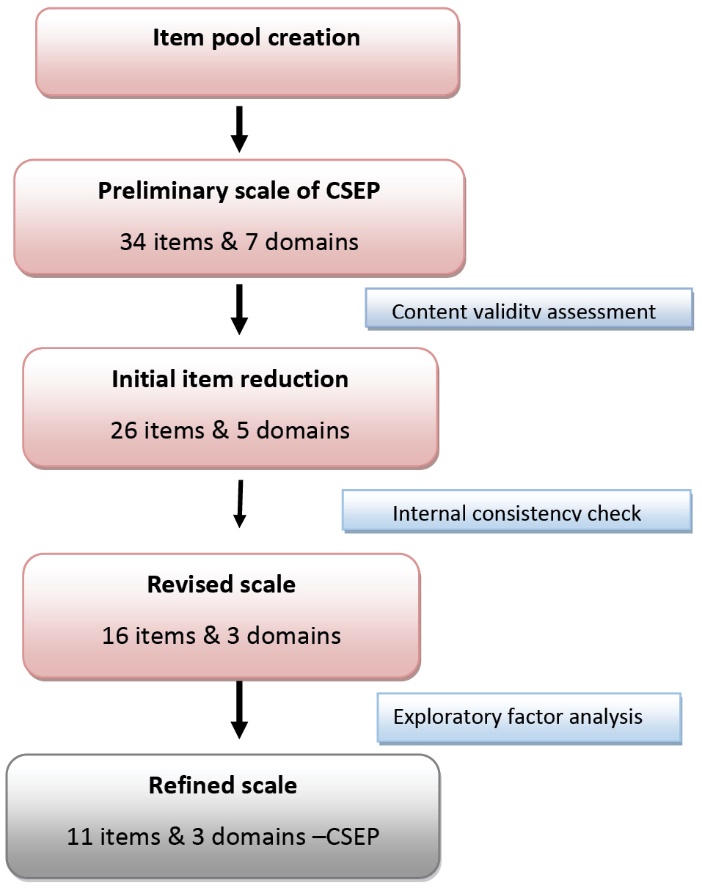
Figure 3. Questionnaire development process.