Health Promotion Perspectives. 16(1):27-47.
doi: 10.34172/hpp.44340
Review Article
Psychobiotic Effects of Postbiotics in Depression, Psychosis and Mania
Aziz Homayouni-Rad Conceptualization, Formal analysis, Funding acquisition, Methodology, Project administration, Resources, Supervision, Validation, Visualization, 1, 2 
Jalil Houshyar Conceptualization, 3
Hossein Alikhah Conceptualization, 4
Saba Kamalledin Moghadam Conceptualization, Data curation, Formal analysis, Investigation, Methodology, Visualization, Writing – original draft, 5, *
Zohreh Osouli Writing – review & editing, 6
Ali Asgharzadeh Resources, Writing – review & editing, 7
Vahideh Sarabi-Aghdam Data curation, Investigation, Methodology, Writing – original draft, 2
Alireza Asghari Project administration, Supervision, Validation, Writing – review & editing, 8
Author information:
1Student Research Committee, Tabriz University of Medical Sciences, Tabriz, Iran
2Department of Food Science and Technology, Faculty of Nutrition and Food Sciences, Tabriz University of Medical Sciences, Tabriz, Iran
3Endocrine Research Center, Tabriz University of Medical Sciences, Tabriz, Iran
4Emergency Medicine Specialist, Assistant Professor, Maragheh University of Medical sciences, Maragheh, Iran
5Department of Food Science and Technology, National Nutrition and Food Technology Research Institute, Shahid Beheshti University of Medical Sciences, Tehran, Iran
6Mental Health Unit, Health Vice Chancellor, Maragheh University of Medical Sciences, Maragheh, Iran
7Department of Clinical Psychology, School of Medicine, Tabriz University of Medical Sciences, Tabriz, Iran
8Canadian College of Integrative Medicine, Canada
Abstract
Background:
The gut microbiota significantly influences mental health through the gut-brain axis, modulating mood, cognition, and emotional regulation. While probiotics and prebiotics have been widely studied for their psychobiotic effects, postbiotics—metabolic byproducts of probiotics—represent an underexplored area with potential therapeutic applications. Understanding the role of postbiotics in mental health disorders, such as depression, psychosis, and mania, could lead to novel treatment strategies. This review examines the psychobiotic potential of postbiotics and their mechanisms of action.
Methods:
A systematic literature review was conducted to evaluate the effects of postbiotics on mental health conditions. We searched PubMed, Medline, EMBASE, and the Cochrane Library for English-language articles published between January 1, 2015, and January 1, 2025, using keywords such as "postbiotic," "paraprobiotic," "depression," "anxiety," and "psychosis." A manual search supplemented the electronic search to ensure comprehensive coverage. Studies focusing on postbiotic effects on mood regulation, neuroinflammation, and neurotransmitter modulation were included.
Results:
Postbiotics demonstrate promising psychobiotic effects in depression, psychosis, and mania. They modulate neurotransmitter levels, including serotonin and gamma-aminobutyric acid (GABA), and reduce neuroinflammation, contributing to improved mood and cognitive function. Additionally, postbiotics influence the hypothalamic-pituitary-adrenal (HPA) axis, enhancing stress response and emotional regulation. These findings suggest that postbiotics may serve as effective therapeutic agents for mental health disorders.
Conclusion:
Postbiotics offer significant potential as novel interventions for mental health conditions, with mechanisms involving neurotransmitter modulation and neuroinflammation reduction. Further empirical research is needed to elucidate their clinical applications and optimize therapeutic protocols. This review highlights the importance of postbiotics in advancing innovative strategies to improve mental health outcomes and well-being.
Keywords: Anxiety disorders, Bipolar disorder, Depressive disorder, Gastrointestinal microbiome, Mood disorders, Probiotics
Copyright and License Information
© 2026 The Author(s).
This is an open access article distributed under the terms of the Creative Commons Attribution License (
http://creativecommons.org/licenses/by/4.0/), which permits unrestricted use, distribution, and reproduction in any medium, provided the original work is properly cited.
Funding Statement
This study was funded by the Research Vice-Chancellor of Tabriz University of Medical Sciences under Grant No. 75607.
Introduction
Mental health disorders represent a major global public health challenge, affecting a significant portion of the population. The World Health Organization reports that over 450 million individuals worldwide suffer from conditions such as depression, anxiety, and psychosis.1 These disorders lead to reduced quality of life, impacting individuals, families, and communities. The increasing prevalence of stress-related conditions highlights the urgent need for effective interventions. Addressing mental health is essential for improving global well-being and reducing societal burdens. This pressing issue underscores the importance of innovative therapeutic approaches. Recent research has identified the gut-brain axis as a critical pathway influencing mental health. The gut microbiota plays a key role in modulating brain function, including mood and cognition.2 Dysbiosis, or microbial imbalance, can contribute to neurological and behavioral dysfunctions, exacerbating conditions like depression and anxiety.2 This bidirectional communication offers a novel perspective on mental health treatment. Exploring microbial interventions could lead to new strategies for managing these disorders. The gut-brain axis provides a foundation for investigating microbiota-based therapies.
Probiotics, defined as beneficial live microorganisms, have shown potential in supporting mental health when consumed in adequate amounts,3 as presented in Table 1. However, emerging evidence suggests that postbiotics, the metabolic byproducts of probiotics, may offer even greater benefits for mental health.4-9 These compounds, including short-chain fatty acids, enzymes, and biogenic amines, reduce inflammation and enhance intestinal health.10-14 Probiotic-rich foods such as yogurt, kefir, sauerkraut, and kimchi, as well as fortified products, serve as sources of postbiotics.15-19 Additionally, postbiotics can be taken indirectly through the consumption of probiotic-rich foods or supplements. In addition, some foods and beverages are fortified with postbiotics.20-22 The therapeutic potential of postbiotics makes them a promising focus for mental health research. Their ability to modulate neurotransmitter activity warrants further exploration.
Table 1.
The Effect of probiotics on mental illness
|
Disorders
|
Probiotic
|
Result
|
Reference
|
| Alzheimer’s Disease |
S.thermophilus DSM 32245
B.lactis DSM 32246,
B. lactis DSM 32247
L. acidophilus DSM 32241
L.helveticus DSM 32242,
L. paracasei DSM 32243
L. plantarum DSM 32244
L.brevis DSM 27961 |
Increasing glucose transporters and insulin-like growth factor receptor β modulation of the pAktand pAMPK pathways that lead to decreased hyperphosphorylation of tau protein |
23
|
| Parkinson’s Disease |
Lactobacillus casei Shirota(in fermented milk) |
Gut microbiota changes associated with intestinal inflammation may contribute to the initiation of α-synmisfolding
bacterial proteins may elicit cross-seeded misfolding, inflammation and oxidativestress, and cellular toxicity in neurodegeneration |
24
|
| Multiple Sclerosis |
Lactobacillus acidophilus, Lactobacillus casei, Bifidobacteriumbifidumand Lactobacillus fermentum |
the induction of experimental autoimmune encephalomyelitis (EAE), by myelin oligodendrocyteglycoprotein peptide, |
25-27
|
| Autism |
Lactobacilus acidophilus
comprising Lactobacilli, Bifidobacilli, and
Streptococcus species
|
Less diverse fecal microbiome by pyrosequencing of 16S rDNA in children suffering autism, decreasing Firmicutes, Bacteriodetes, and Actinobacteria |
28-30
|
| Schizophrenia |
increased abundance of Lactobacilli and Actinobacteria |
the disorder is associated with changes in Gammaproteobacteria at class level, Enterobacteriales at order level, and Bacteroidesfragilis at species level
a panel consisting of Aerococcaceae, Bifidobacteriaceae, Brucellaceae, Pasteurellaceae, and Rikenellaceae is sufficient to distinguish patients from controls decreased abundance of γ-Proteobacteria and Bacteroidetes |
31,32
|
| Alcohol Dependence |
heat-killed L. brevisSBC8803
Yakult 400 |
maintaining tight junction protein expression, improving intestinal villus/crypt histology, changing mucus thickness, normalizing intestinal cytokines levels and balancing intestinal immunity
increased expression of cytoprotective Hsp25 mRNA in the small intestine and prevented ethanolinduced overexpression of TNF
Clostridium coccoides ↑ Bacteroidesfragilis ↑ Enterobacteriaceae ↓
E.coli ↓ |
33,34
|
| ADHD |
L. rhamnosus GG
Lactobacillus rhamnosusGG ATCC53103 (LGG) |
↓risk for ADHD
children and adolescents with ADHD who received LGG supplementation reported better health-related QoL compared to their peers who received the placebo |
35,36
|
This review synthesizes current evidence on the psychobiotic effects of postbiotics in depression, psychosis, and mania. A systematic search was conducted across PubMed, Medline, EMBASE, and the Cochrane Library, using keywords like “postbiotic,” “paraprobiotic,” “depression,” and “anxiety.” The search targeted English-language articles published between January 1, 2015, and January 1, 2025, supplemented by a manual search for comprehensive coverage. Key findings are summarized in Table 2, outlining postbiotic effects on selected mental health conditions. Further research is needed to establish postbiotics as viable treatments. This study aims to contribute to innovative mental health solutions by highlighting current evidence and research gaps.
Table 2.
The Effect of postbiotics on mental illnesses.
|
Bacteria
|
Form of probiotic
|
Research model
|
Dosage
|
Results
|
References
|
|
Enterococcusfaecalisstrain EC-12 (EC-12)
|
Heat killed |
Mice |
diet enriched with 0.125% concentration of postbiotic |
↓ anxiety-like
and depression-like behavior |
37
|
Lactobacillus
fermentum and Lactobacillus delbrueckii
|
Heat-killed |
Mouse model. |
(3 _ 109 cell bodies/gram of
chow) for three weeks |
↓ locomotor activity in the open-field test and reducing the baseline corticosterone
Levels |
38
|
|
Lactobacillus paracasei,
|
Heat-killed |
Mice |
1 _ 1010 12 weeks |
↓Stress – no adverse effect of postbiotic observed |
39
|
|
Lb. gasseri CP2305
|
Postbiotic |
Human |
(1 × 10¹⁰ cfu/day) for 24 days |
↓STAI scores after intervention |
40
|
|
Lacticaseibacillus paracasei NK112
|
Heat killed |
Mice |
- |
↓ K1-induced anxious, depressive, and memory-impaired behaviors - elevated Y-maze tasks, IL-1β, IL-6, and tumor necrosis factor (TNF)-α expression |
41
|
|
Lb. gasseri CP2305
|
Paraprobiotic |
Human |
1 × 10¹⁰ cfu/day daily for 12 weeks |
Suppressed STAI escalation |
42
|
|
Lactobacillus helveticus strain MCC1848
|
heat-killed |
Mice |
1 × 10¹⁰ cfu/day 24 weeks |
↓Anxiety- or depressive-like behaviors in sCSDS mice. |
43
|
|
Lactobacillus paracasei PS23
|
Heat killed |
Mice |
- |
↓ Protein levels of brain-derived neurotropic factor, mineralocorticoid, and, glucocorticoid receptors in the hippocampus
dopamine levels in hippocampus and prefrontal cortex. |
44
|
|
Lactobacillus helveticus
|
Heat killed |
Human |
5*109 cfu/day for 4 weeks |
↑the shortened version of the POMS 2 ‘friendliness’ and the VAS ‘relaxed
-Had no significant effects on negative mood state items (e.g. anger, nervousness, and confusion) |
45
|
Role of postbiotics in depression
Depressive and anxiety disorders rank among the most prevalent mental health conditions affecting individuals. Variants in the oxytocin receptor and serotonin transporter genes have all been associated with anxiety disorders.46,47 In depression, brain neurotransmitters such as dopamine, serotonin, and norepinephrine are reduced.48 Depression, characterized by a persistently low mood and loss of interest, is often accompanied by feelings of guilt, despair, loss of appetite, and insomnia. It is a prevalent type of mental disorder.49 Anxiety is an emotional condition marked by feelings of stress and fear, accompanied by physical symptoms like nervousness, trembling, and issues related to digestion, breathing, and circulation, often occurring without any clear external triggers.50 According to the World Health Organization,51 280 million people have depression worldwide. Depression was approximately 50% more common among women than among men in 2023.51 Depression, anxiety, and stress are gradual processes of emotional deterioration. Stress can result not only from physiological or emotional challenges but also from temporary reactions in fast-paced situations. Multiple factors influence mood status in human beings. Several studies have confirmed a meaningful association between depression and factors such as neurotransmitter imbalances, a positive family history, stressful life events, and hormonal changes.52 Treatments for depression and anxiety basically include medication, psychotherapy, and lifestyle changes (as shown in Figure 1). There is a complicated relationship between anxiety and human depression.53 Anxiety, acute and chronic stress, and depression cause changes in the gut microbial profile.54 Measuring of brain-derived neurotrophic factor (BDNF) levels,55 and adrenocorticotropic hormone and cortisol levels,56 indicated a connection between depression and anxiety. Prolonged exposure to stress results in elevated cortisol levels, which can diminish the availability of other neurotransmitters in the brain, such as dopamine and serotonin, both of which are linked to depression.57 BDNF serves as a crucial element connecting stress to depression.58 Several clinical and animal studies have demonstrated that stress diminishes the expression and activity of brain-derived neurotrophic factor (BDNF) in the hippocampus. This change mirrors the alterations seen in individuals with monoamine deficiency.59-61 Additionally, the management of stress is linked with the gut microbiota, which is responsible in the stress response.62
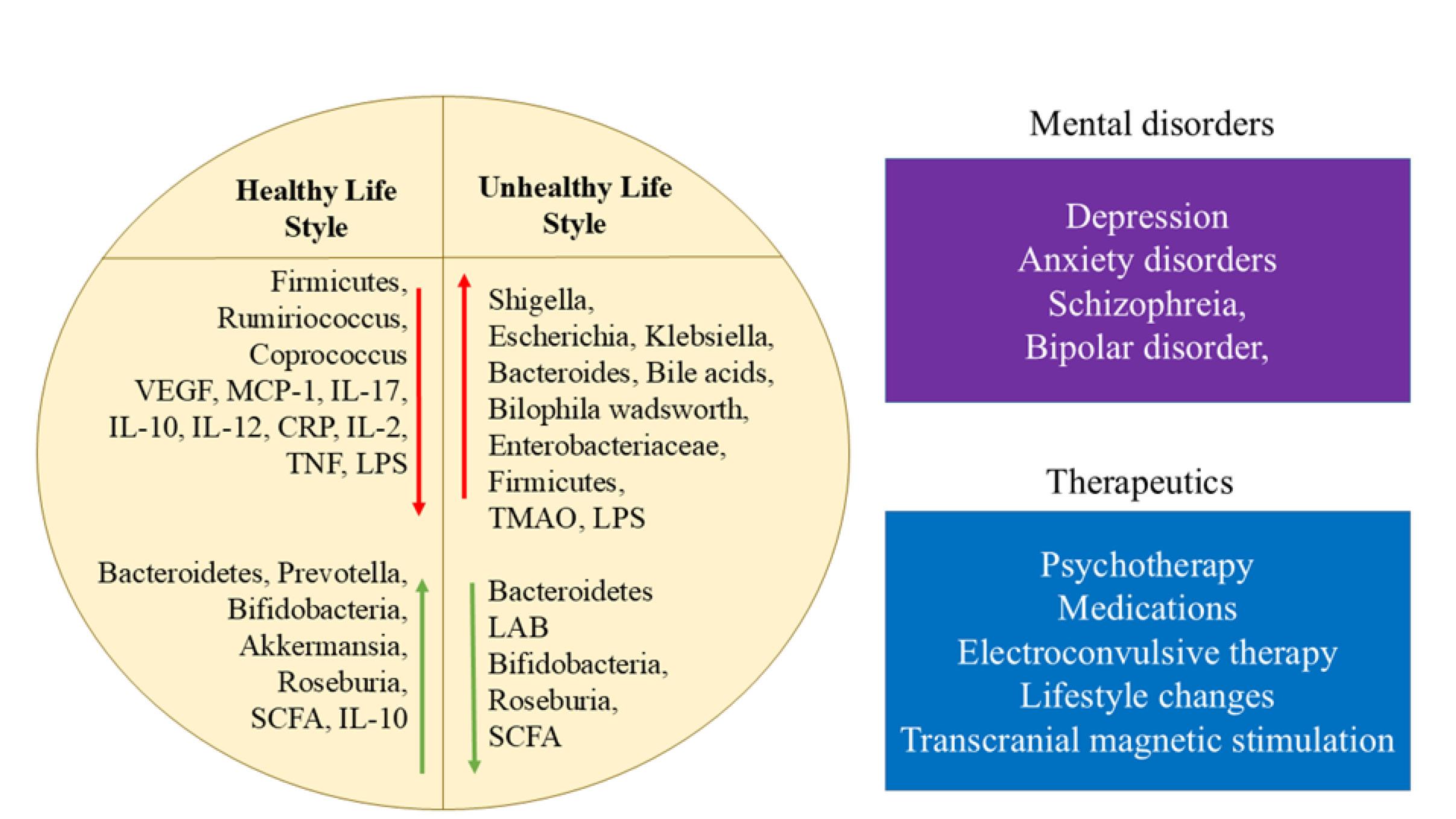
Figure 1.
Effects of a healthy lifestyle (regular exercise, a balanced diet, adequate sleep, and stress management) versus unhealthy lifestyles (poor nutrition, lack of physical activity, inadequate sleep, and high stress) on mental health
.
Effects of a healthy lifestyle (regular exercise, a balanced diet, adequate sleep, and stress management) versus unhealthy lifestyles (poor nutrition, lack of physical activity, inadequate sleep, and high stress) on mental health
Psychological stresses activate the neuroendocrine, nervous, and immune systems and alter mood and the gut microbiota.63 The gut microbiota (GM) plays a crucial role in both the development and functioning of the gut-brain axis, influencing it in significant ways.64 Disruption of the gut microbiota may contribute to the development of mental health and neurological disorders.65 Another study investigated the gut microbiota of individuals diagnosed with depression, comparing it to that of a control group through fecal microbiota analysis. The findings revealed significant differences between the two groups. Notably, Lachnospiraceae was found to be less prevalent, while Bacteroidaceae was more abundant in the feces of those with depression.
Additionally, a specific clade within Alistipes was linked to depressive symptoms. Diets high in carbohydrates and simple sugars were shown to promote the growth of this clade in the gut.66 Valeric acid, which is a metabolic byproduct of this bacterial genus, is recognized as a neurochemical compound that interacts with GABA-α receptors.67 The impact of L. rhamnosus on neurotransmission was studied in mice, which revealed that this strain selectively regulates the expression of gamma-aminobutyric acid (GABA) within the brain. and ultimately reduces depression-related behavior. A comparison of the results in vagotomized mice revealed the absence of these effects. Therefore, the vagus nerve must play an imperative role in mediating the influences of the gut on the brain.68 These findings are consistent with those of another study that examined the use of direct vagus nerve stimulation (VNS) as a treatment for depression that does not respond to traditional antidepressants.69 Furthermore, the clinical trial conducted by Wallace and Milev70 was to evaluate the effects of probiotics on anxiety and depression symptoms of Major Depressive Disorder (MDD). The result of consummation of probiotic supplements containing Lactobacillus helveticus R0052 and Bifidobacterium longum R0175 at a dose of 3 × 10⁹ CFU once per day for 8 weeks revealed substantial improvements in affective clinical symptoms were observed. In another study, anxiety-like behaviors were diminished in B. dentium-monocolonized mice compared with control mice, likely because of the stimulation of serotonin synthesis and the regulation of serotonin transporters (SERTs) in the gastrointestinal tract and the receptors present both in the gut and the brain.71 Probiotics enhance tryptophan levels through the serotonin pathway by decreasing the activity of enzymes that convert tryptophan into kynurenine.72 Therefore, reducing the kynurenine/tryptophan ratio in the probiotic group may be a mechanism for the detected effects on depression.73 In 2017, Colica et al.74 performed a clinical trial on humans using a psychobiotic suspension containing Lactobacillus bulgaricus (CNCM strain numbers I-1632 and I-1519), Lactobacillus subsp. lactis and Streptococcus thermophilus and reported a considerable lessening in anxiety parameters (HAM-A) in people with depressive symptoms. Similarly, 30 days of intake of a probiotic mixture containing L. helveticusand B. longum had valuable consequences on anxiety and depressive measures and resulted in lowered concentrations of the stress hormone cortisol in individuals without health issues.75 Heat-killed Lactobacillus plantarum effectively stopped sexually transmitted (ST) infection in mice, demonstrated by reduced weight loss, bacterial translocation, and tissue damage. The LP probiotics significantly mitigated brain injury and neuroinflammation, as indicated by lower levels of interleukin (IL)-1β and IL-6, alongside higher levels of IL-4 and IL-10. Behavioral assessments showed that metabolites from the protected mice countered ST-induced anxiety, depressive-like symptoms, and cognitive decline.76
Role of postbiotics in psychosis
Psychosis is a mental health condition categorized by a loss of contact with reality. This can manifest as delusions, hallucinations, disorganized thinking and speech, and difficulty in distinguishing between what is real and what is not. Schizophrenia spectrum disorder that includes schizoaffective disorder (depressed type), schizotypal personality disorder, schizophreniform, and atypical psychosis.77 Importantly, psychosis can be a symptom of other mental health conditions or medical illnesses, and it is vital to pursue professional help for an accurate diagnosis and suitable treatment.78
Therapies that modulate oxytocinergic signaling have regulating effects on anxiety, depression, and schizophrenia and may offer new policies for the treatment of mental health disease and social behavior.76,79
Positive symptoms are those characterized by the existence of an abnormal phenomenon and include delusions, hallucinations, thought disorder, bizarre behavior, and catatonia.77 These effects are thought to result from an overabundance of dopamine in the mesolimbic pathway.80 Glutamate is recognized as an excitatory neurotransmitter, and research has indicated a reduction in the functionality of the N-methyl-D-aspartate (NMDA) glutamate receptor as well as gamma-amino-butyric acid (GABA), a substantial inhibitory neurotransmitter.81 Studies indicate that dysfunction in patients suffering from schizophrenia is associated with an imbalance in acetylcholine.82 The management of patients with psychotic symptoms varies markedly, depending on the underlying etiological and pathophysiological factors contributing to the psychosis, which may include neuromodulatory pathways. Antipsychotic medications are typically the standard treatment for managing psychotic episodes and disorders. The selection of medication, along with its dosage and method of administration, is primarily determined by the specific circumstances of each case. Probiotic supplementation has constant outcomes on the gut microbiota as well as anti-inflammatory and immune-modulatory properties. Disruptions in gut microbiota are associated with prominent serum levels of pro-inflammatory cytokine,83 and there is a relationship between the levels of inflammatory markers and the intensity of psychotic symptoms.84 Moreover, taking probiotic supplements could be advantageous for addressing undesirable symptoms in patients with schizophrenia.85 It was previously reported that probiotic supplementation markedly increases the levels of brain-derived neurotrophic factor (BDNF).86 BDNF has an advanced role in neuroplasticity and neuronal survival,87 and alterations in BDNF levels are linked to the cognitive impairments often observed in individuals with chronic schizophrenia.88 Furthermore, neurotransmitters that cross the blood‒brain barrier, such as serotonin and γ-aminobutyric acid (GABA), can affect brain function.85 Nagamine, Sato et al. (2012) reported that the microbiota of patients with chronic schizophrenia before probiotic usage was characterized by high percentages of Bacteroides, Clostridium, Enterococcus, and Ruminococcus and by a percentage of Bifidobacterium close to zero. Alterations in fecal microbiota and a reduction in negative symptoms were observed following probiotic treatment, highlighting the potential clinical significance of immunomodulation in individuals with schizophrenia.89 Equally, Jamilian and Ghaderi (2021) reported that probiotics comprising Lactobacillus acidophilus, Bifidobacterium bifidum, Bifidobacterium lactis and Bifidobacterium along with selenium supplementation over a three-month period, positively impacted the general positive and negative syndrome scale (PANSS) scores and improved certain metabolic profiles in patients with chronic schizophrenia.90 According to the registered records of ClinicalTrials.gov, several policies have aimed at modifying the neurochemical effects of dopamine, serotonin and oxytocin for the treatment of cognitive impairment in patients with schizophrenia/psychosis.91,92
Role of postbiotics in mania
Bipolar disorders, also known as manic disorders or manic episodes, refer to a set of mental illnesses characterized by periods of intense and elevated mood, energy, and activity. These episodes are often accompanied by symptoms such as racing thoughts, impulsivity, increased goal-directed activity, increased self-esteem and decreased need for sleep.93 Treatments for manic disorders usually involve a mixture of medication, therapy and support services to cope with symptoms and develop quality of life.94,95 Manic episodes can be accompanied by intense feelings of happiness and euphoria. Importantly, these feelings are often extreme and can lead to impulsive and risky behavior. It is therefore important to distinguish between genuine happiness and an elevated mood during a manic episode.96,97
Recent studies have indicated that mania may be caused by a combination of environmental and genetic factors, imbalances in brain chemistry, and medical disorders, including central nervous system (CNS) syphilis, delirium, encephalitis, brain tumors, and influenza.98,99 Depression is frequently associated with systems that respond to stress,100 whereas mania is related to energy and mitochondrial dysfunction.101 Studies in a mouse model revealed that nitrated product intervention changed Lachnospiraceae and Erysipelotrichia, leading to the induction of manic-like behaviors. Therefore, there is a connection between dietary habits, changes in behavior, and the composition of gut microbiota in relation to mania.102
Additionally, the capacity of the gut microbiota to influence ENS function has also been shown to be affected by the effects of probiotics on myenteric neuronal function. Administering Lactobacillus reuteri to rats for a period of nine days heightened the excitability of enteric sensory neurons (AH) and reduced the duration of slow AH.103 The application of a fermented medium produced by Bifidobacterium longum to an in situ preparation of mouse myenteric plexus neurons resulted in a decrease in the impulsiveness of ENS neurons,104 recommending that there might be some specificity in the way that various bacteria affect ENS functions. The administration of Lactobacillus rhamnosus to healthy BALB/c mice led to a reduction in mania-like behaviors and induced long-term alterations in gamma-aminobutyric acid receptor expression within the central nervous system (CNS).
In Swiss Webster (CFW) mice, intraluminal delivery of L. rhamnosus resulted in a better firing rate of the mesenteric nerve bundle, suggesting that this probiotic strain activates specific neural pathways. This response was inhibited by subdiaphragmatic vagotomy, highlighting the involvement of the vagus nerve in the effects observed from the probiotic.105 An improved mood was shown in healthy volunteers following 3 weeks of consumption of an L. casei-containing milk drink.106 Additionally, female mice fed L. reuteri exhibit commonplace grooming activity than control mice do. Oxytocin, a neurohypophyseal hormone, regulates this aspect of maternal behavior. OXytocin plays an essential role in the effects of the central nervous system on behavior.107 Interestingly, it affects the body’s energy balance and the immune system.108 The postbiotics of L. plantarum provided similar benefits to probiotic bacteria in heat-stressed broilers.109 The addition of the cell-free supernatant of L. plantarum to bird feed increased the percentage of eggs produced by birds under heat stress.110 In another study, the use of sodium butyrate (NaB) as a postbiotic improved animal sociability and memory in passive avoidance (PA). Furthermore, coadministration of α-lactalbumin,46 at each dose used, with NaB (100 mg/kg) was impressive in generating antidepressant-like activity, declining the immobility time (IT) in treated mouse behavioral models of idiopathic autism (BTBR), which exhibit a 100% absence of the corpus callosum and a strictly reduced hippocampal commissure in comparison with those of the control group.111 Changes in serotonin receptor (5-HT1A) expression in the hippocampus and SERT mRNA levels in the gut were not observed in animals that were fed heat-killed bacteria. The clear reduction in 5-HT-mediated neurotransmission after the inactivation of probiotics indicates that this system may be solely affected by the metabolites produced by the probiotic bacteria, known as postbiotics. Contrariwise, the GABA system may be modulated by probiotic cell wall components (as another postbiotic form) that physically interact with the host gut mucosa.112 The effects of antidepressants and antipsychotic drugs and the effects of monoamines (e.g., serotonin and dopamine) on mania and bipolar disorder have been documented through biological studies.113,114
How postbiotics manage mood
The metabolites synthesized by the host microbiota, for example, short-chain fatty are linked to the release of hormones that promote positive emotions and a sense of well-being. They can enhance social interactions and help alleviate symptoms of anxiety, stress, and depression; thus, probiotics and their postbiotics could regulate these hormones and improve life-menial qualities, which refer to the small, everyday qualities and tasks that make up a person’s life.115 The role of some postbiotics in mental health is described. Interference with the gut microbiota involves variations in the levels of various neurotransmitters and neuromodulators, primarily serotonin, γ-aminobutyric acid (GABA), and dopamine. These changes are linked to the interactions between gut microbiota and brain function.116 The hypothalamic‒pituitary‒adrenal (HPA) axis is another fascinating regulatory system.117 (Table 3)
Table 3.
the Effect of postbiotics/probiotics on happiness hormones
|
Bacteria
|
Dosage
|
Research model
|
Result
|
Reference
|
|
Bifidobacterium infantisBi-26, Lactobacillus rhamnosusHN001, Bifidobacterium lactisBL-04, and Lactobacillus paracaseiLPC-37
|
1010 CFU/pack For 108 day |
Human |
↑Serotoninand dopamine
↓The severity of autism and gastrointestinal symptoms. |
118
|
|
Bacillus clausii and Lactobacillus fermentum NMCC-14)
|
1010 CFU/day for 14 day |
Mouse |
↓Blood cortisol and adrenocorticotropic hormone (ACTH) levels
↑The dopamine, serotonin, and norepinephrine levels
↑ expression of mRNA of D1 and D2 (except HC, LF-S, day 14) receptors and synaptophysin |
119
|
|
Lactobacillus plantarum DR7
|
for 12 weeks |
Human |
↑gene expression of dopamine beta hydrolase (DBH)- tryptophan hydroxylase-II (TPH2, serotonin pathway) |
120
|
|
B longum DSM 24736, B infantis DSM 24737, B breve DSM 24732, L acidophilus DSM 24735, L paracasei DSM 24733, L bulgaricus DSM 24734, L plantarum DSM 24730, and Streptococcus salivarius subspecies thermophilus DSM 24731
|
15/100 mg kg–1 for 40 days |
Rat |
↑the expression of many genes related to neuroplasticity and serotonin receptor (5HT) |
121
|
|
L. reuter
|
3.5 × 10⁵ organisms/mouse/day in drinking water for 7 days |
Mouse |
Up regulation of oxytocin in female mice
↑ offspring survival for mouse mothers fed LR |
122
|
|
Lactobacillus plantarum PS128 probiotic
|
daily intake of (6 × 10¹⁰ CFUs) for 28 weeks |
Human |
There were no significant changes of the four groups on the OXT level |
123
|
|
Lactobacillus reuteri
|
3.5 × 10⁵ organisms/mouse/day for two weeks |
Mouse |
Enhancement of wound-healing through upregulation of the neuropeptide hormone oxytocin |
124
|
Mood Management by Short-Chain Fatty Acids
Cyclopropane fatty acids (CFAs), including acetate, butyrate, and propionate, are produced through the fermentation of indigestible carbohydrates (prebiotics) by anaerobic bacteria in the gut. These short-chain fatty acids (SCFAs) serve as a vital energy source for both the intestinal microbiota and intestinal epithelial cells (IECs), influencing various nonimmune and immune functions within the intestinal environment.125-127 In addition, SCFAs maintain the integrity of the intestinal mucosal barrier. Mucin gene expression in goblet cells is upregulated in response to SCFAs.128 Additionally, B. longum colonization safeguarded mice from fatal outcomes caused by a severe infection by promoting the production of short-chain fatty acids (SCFAs), particularly acetate. This process helped maintain the integrity of intestinal epithelial cells (IECs) and prevented the translocation of E. coli O157:H7 Shiga toxin.129 SCFAs play a significant role in innate and intestinal immunity, as they are histone deacetylase (HDAC) inhibitors with anti-inflammatory results.127 They enhance the differentiation of Tregs and support anti-inflammatory responses, by this means reducing the severity of colitis.130 SCFA acetate, butyrate, and propionate administration to germ-free mice improved the expression of anti-inflammatory IL-10-producing Foxp3-expressing Tregs through HDAC inhibition.131
Moreover, butyrate increases IL-18 expression in epithelial cells, increases IL-10 expression in dendritic cells (DCs) and macrophages, allows them to boost the differentiation of Tregs, and protects against colitis.132 Thus, SCFAs influence both immune and non-immune cells in the intestine, playing a key role in regulating intestinal homeostasis. Acetic acid, propionic acid, and pentanoic acid significantly decreased the levels of norepinephrine, 5-hydroxyindole acetic acid (5-HIAA) and 5-HT in the hypothalami of depressed mice. SCFAs exemplify the signature hormones of the gut microbiota. Postbiotics can serve as connections between the gut microbiota and its various functions through traditional endocrine signaling. For instance, SCFAs have the ability to regulate the secretion of enteroendocrine 5-HT,133 which is a vital neurotransmitter at multiple levels of the microbiota–gut brain (MGB) axis.134 SCFAs, such as acetic acid, butyric acid, and propionic acid, can enter the circulatory system, and the gut microbiota may indicate to the host brain in this way.135
Mood management by GABA
Gamma-aminobutyric acid (GABA) is an essential inhibitory neurotransmitter in the central nervous system, playing a vigorous role in decreasing neuronal excitability and adjusting muscle tone.136,137 Dysfunction of the central GABA system is related to anxiety spectrum disorders.138,139 In both animal and human research, substances that enhance GABA receptor activity typically exhibit anxiolytic effects, while those that inhibit these receptors tend to induce anxiety-like behaviors.
Additionally, the gut microbiome can synthesize the neurotransmitter gamma-aminobutyric acid (GABA), which can then interact with and influence the central nervous system (CNS) through the enteric nervous system (ENS). This allows the gut microbiome to potentially modulate the gut-brain axis, the reciprocal communication pathway linking the gastrointestinal tract and the brain.140 Moreover, GABA has antidepressant,141 antidiabetic,142 antihypertensive,143 neuroprotective,144 cardiovascular regulatory,145 and anticancer146 effects. The biosynthesis of GABA in probiotic lactic acid bacteria was performed through the enzyme glutamate decarboxylase with L-glutamate as a substrate.147 The GAD system is an amino acid-dependent mechanism that helps maintain intracellular pH balance by facilitating the biosynthesis of GABA, contributing to acid resistance.148 As the main inhibitory neurotransmitter in the mammalian central nervous system, GABA modifies the function of growth hormones, development of the plasma concentration, and protein synthesis in the brain.149 GABA (201.78 µg/mL) was produced in MRS broth medium by L. plantarum K154, which was isolated from Kimchi.150 Additionally, L. brevis F064A, isolated from Thai fermented sausage, presented a high GABA content of 2.85 ± 0.10 mg/mL.151 Furthermore, yogurt containing L. paracasei had the maximum gamma-aminobutyric acid (GABA) content (99.63 μg/mL).152
Mood management by dopamine
Dopamine is a crucial neurotransmitter responsible for the brain’s reward system, remarkably influencing feelings of pleasure and motivation.147,153 This hormone is related to happiness and regulates mood. Once, one individual feels a physical attraction towards another, the activation of dopamine and serotonin and the production of oxytocin increase. Oxytocin production leads to reduced pain. These processes regulate emotion and disconnect the amygdala, the part of the brain that is active against negative emotions such as fear.154 The gut microbiome contains certain bacterial species, such as Staphylococcus aureus, Escherichia coli, Bacillus cereus, Bacillus mycoides, Bacillus subtilis, Proteus vulgaris, and Serratia marcescens, which have the ability to produce more than half of the body’s total dopamine, a key neurotransmitter. This production of dopamine by the gut microbiome may allow for potential modulation of dopaminergic signaling pathways, including those in the central nervous system.155,156 Enterococcus sp.can generate dopamine in a gastrointestinal-like environment in the presence of the dopamine precursor L-3,4-dihydroxyphenylalanine (L-DOPA). E. faecium may affect the host through dopaminergic pathways. The production of dopamine by E. faecium closely reflects the accessibility of L-DOPA. However, L-DOPA is commonly found in various raw plants and plant-based food products. Under alkaline conditions and high temperatures, L-DOPA can break down into different quinones.157
Mood Management by Serotonin
Serotonin (5-hydroxytryptamine, 5-HT) interferes with a wide range of physiological functions by stimulating multiple receptors, and abnormalities in these receptor systems are connected with many psychiatric disorders, including anxiety, depression, cognition, psychosis, migraine, feeding, disorders of sexual functioning and sleep. In the human gut, serotonin is synthesized and secreted by entero-chromaffin (EC), which plays a role in adjusting contractile frequency during peristalsis and influencing metabolic processes.158 The gut microbiome can influence serotonin levels through multiple mechanisms. Postbiotics, the metabolic byproducts of probiotic bacteria, can increase the concentration of serotonin within the intestinal lumen. This is achieved by upregulating the expression of key serotonin synthesis enzymes, such as tryptophan hydroxylase-1 (TpH1), and by downregulating the serotonin transporter’s expression (SERT). Additionally, secondary metabolites produced by probiotic bacteria can interact with microbial and host receptors, potentially contributing to this effect.
Furthermore, the gut microbiome can modulate serotonin levels in the central nervous system. Likewise, the gut microbiota can affect the expression of serotonin receptors, transporters, and the enzymes involved in serotonin synthesis and metabolism, such as tryptophan hydroxylase-2 (TpH2) and monoamine oxidase (MAO). These interactions allow the gut microbiome to exert a broader influence on serotonergic signaling pathways throughout the body.159 Compared with germ-free mice, mice with integrated human gut microbiota have higher colonic levels of serotonin. Additionally, the mRNA levels of Tph1, which encodes the key enzyme responsible for serotonin synthesis,160 and chromogranin A (CHGA), which adjusts an indicator for serotonin secretion, are increased. An EC model cell line revealed that the intensification in Tph1 mRNA was induced by acetate and butyrate.161 A previous study indicated that butyrate could release unbalanced absorptive colonic motor activity in germ-free mice via the intervention of amended serotonin levels.162 Similarly, postbiotic acetate derived from B. dentium was demonstrated to promote colonic levels of serotonin. Interestingly, scientists have also shown that mono-colonized mice exhibit amplified expression of SERTs and receptors in the gut, as well as augmented expression of the 5-hydroxy tryptamine receptor 2A (Htr2a) receptor in the hippocampus.71 Increased intestine SERT expression has also been realized using L. reuteri and the supernatants of Enterococcus faecium, Enterococcus faecalis and Bacillus subtilis.163 Furthermore, the E. coli strain Nissle 1917 elevates host serotonin levels in a dose-dependent manner, which seems to be independent of all secondary metabolites (postbiotics) previously associated with regulating serotonergic gene expression.164 Spore-forming bacteria are sufficient to stimulate serotonin synthesis in EC cells, and these outcomes are mediated by postbiotics. In particular, bile acid chelates, butyrate, deoxycholate, p-aminobenzonate, and tyramine can augment Tph1 mRNA and colonic serotonin. Importantly, direct use of postbiotics only prompted temporary boosting of colonic serotonin levels, whereas colonization with spore-forming bacterial cells led to long-term elevation.165-167 Spore formation by T. sanguinis increases intestinal serotonin.168
Mood management by tryptophan
Tryptophan is known for having a key role in the composition of neurotransmitters such as melatonin, niacin, and serotonin.169 Tryptophan cannot be produced by the human body and must be acquired through diet or released during protein breakdown. This essential amino acid plays a key role in various metabolic processes and serves as an important factor influencing mood, cognition, and behavior.170 Tryptophan serves as a precursor for the production of various important molecules, such as proteins, the aminergic neurotransmitter serotonin (5-hydroxytryptamine, 5-HT), and nicotinamide adenine dinucleotide (NAD/NADH). The conversion of tryptophan into these compounds occurs through the kynurenine biosynthetic pathway. The initial step in this pathway is the oxidation of tryptophan, which is catalyzed by enzymes like l-tryptophan 2,3-dioxygenase, IDO-1, or IDO-2, leading to the synthesis of the first stable metabolite, kynurenine.171
The relationship between probiotic supplementary and the alteration of serotonin levels in patients undergoing combination antiretroviral therapy (cART) has been investigated. Researchers found that after 6 months of probiotic supplementation, there was a concurrent shrinkage in the levels of fecal tryptophan and an escalation in serum serotonin levels. It should be pointed out that only a small fraction, less than 1%, of the available tryptophan is actually converted into serotonin (5-HT) within the brain.172 Furthermore, the influence of probiotic supplementation on depression significantly reduces the kynurenine/tryptophan ratio, leading to a decrease in the BDI score.173 In comparison to the placebo, supplementation with Lactobacillus plantarum DR7 enhanced the serotonin pathway, evidenced by reduced levels of plasma dopamine β-hydroxylase (DBH), tyrosine hydroxylase (TH), indoleamine 2,3-dioxygenase, and tryptophan 2,3-dioxygenase, alongside increased expression of tryptophan hydroxylase-2 and 5-hydroxytryptamine receptor-6. Meanwhile, the dopamine pathway remained balanced due to consistent expression of TH and DBH over the 12-week period.174
Mood management by oxytocin
Oxytocin is a neuropeptide hormone primarily synthesized in the paraventricular and supraoptic nuclei of the hypothalamus in the brain. This hormone is then stored and subsequently released into the general bloodstream. Oxytocin is well-known for its involvement in a variety of psychological and behavioral processes, such as those associated with love, happiness, and trust. These psychoactive effects are linked to various social and emotional experiences, including romantic attachment, sexual activity, and parental behaviors, through nurturing, pair-bonding, and cooperation.175 Oxytocin functions together with the hypothalamic‒pituitary‒adrenal stress axis to repress glucocorticoid stress-associated hormones and similarly reduce feelings of anxiety.176 Significantly, enhancing the skin’s resilience through improved wound healing capabilities helps safeguard against environmental threats and other potentially harmful agents.177
In relation to mental health, oxytocin has anxiolytic properties, helping to reduce stress and promote feelings of well-being.178 Poutahidis et al. (2013)124 demonstrated that consuming L. reuteri in mouse models led to increased oxytocin levels in the host animals through a vagus nerve-mediated mechanism. This finding supports the existence of a gut-brain axis and underscores the role of gut bacteria in overall health. Even sterile lysates of L. reuteri were sufficient to boost oxytocin expression in the rodent brain, extending this effect to the hypothalamic-pituitary-adrenal (HPA) axis and ultimately reducing systemic levels of stress hormones.179 Similarly, pregnant and nursing female mice that consumed L. reuteri exhibited enhanced nurturing behaviors and produced more offspring compared to those on a fast-food diet or a control diet, further highlighting the profound impact of gut bacteria on physiological and behavioral outcomes.180 By activating the brain’s reward centers, oxytocin skews the nervous system towards pleasure and fosters a more positive outlook.181 Supplementation with L. reuteri enhances oxytocin levels in the hypothalamus, activates the mesolimbic dopamine reward pathway, and encourages prosocial behaviors.182 The consummation of purified L. reuteri in drinking water significantly increases the level of the neuropeptide hormone oxytocin in rats.183 A recent study investigated the synergistic effects of probiotics and oxytocin in individuals with Autism Spectrum Disorder (ASD) by consumption of Lactobacillus plantarum PS128 probiotic or placebo fosr 16 weeks. Outcomes showed improvements in the Social Responsiveness Scale (SRS) Aberrant Behavior Checklist (ABC), and the Clinical Global Impression (CGI) Improvement compared to the placebo.184 These findings reveal the astonishing role of oxytocin as a postbiotic involving mental, social, and physical health, with extensive possible benefits for high-quality and healthy individuals.
Posbiotic–Brain Signaling
The immune, metabolic, neuroendocrine, autonomic and enteric nervous systems (ENS) are known channels of gut–brain communication (Figure 2). Gut microbes produce postbiotics such as acetylcholine, noradrenaline, dopamine, and GABA I.185 The walls of the gut consist of the enteric nervous system and are primarily responsible for the motility of neurotransmitters and postbiotics, including short-chain fatty acids.186
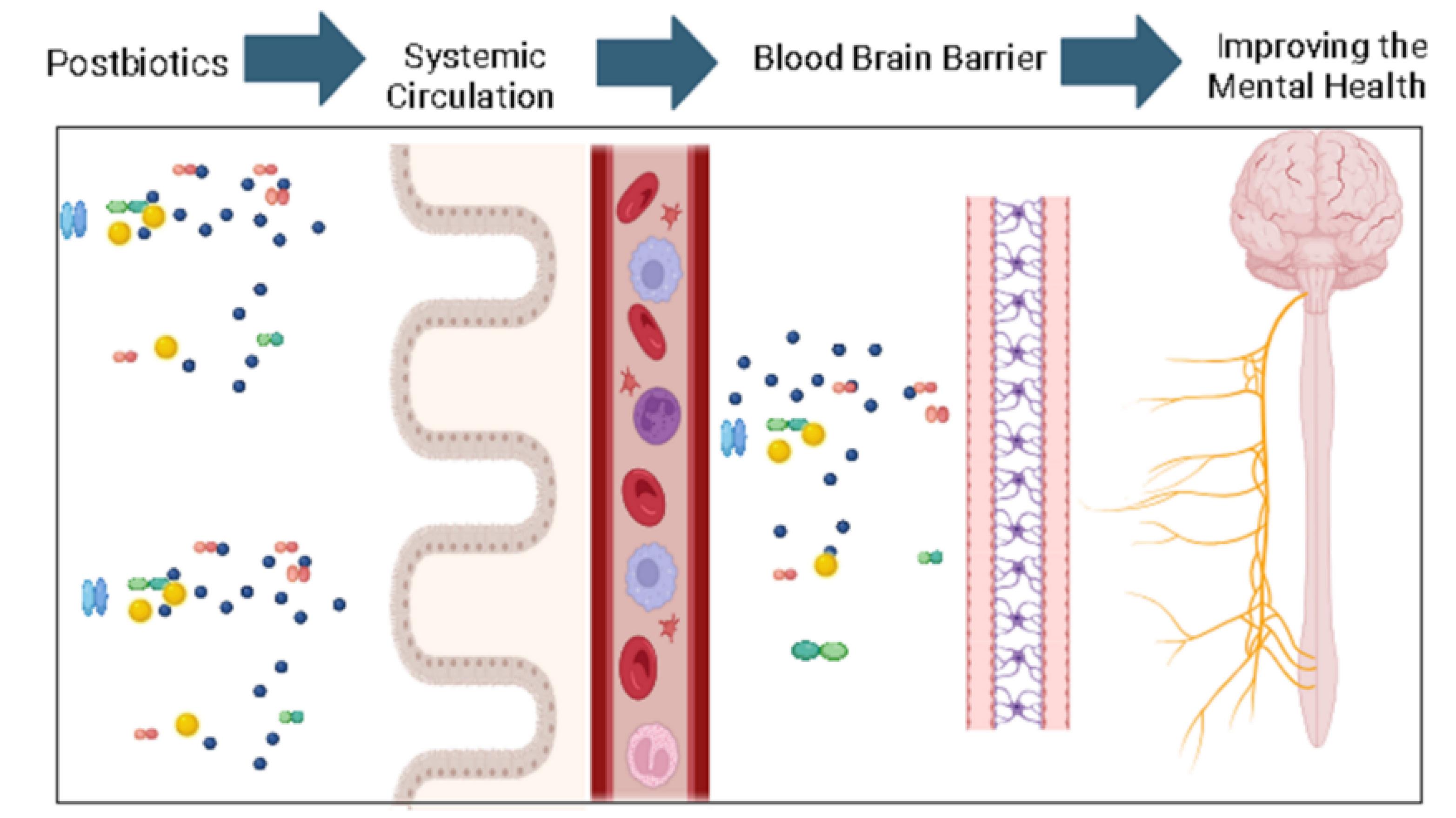
Figure 2.
Interactions among probiotics, the blood‒brain barrier, and mental health
.
Interactions among probiotics, the blood‒brain barrier, and mental health
Bacteria–Enteric Nervous System Signaling
Neurodevelopment is a multifaceted process shaped by a combination of internal and external influences. The autonomic nervous system (ANS) and the enteric nervous system (ENS) play crucial roles in the neural regulation of gastrointestinal function. The physiological conditions of the gut, including acidity, nutrient levels, osmolality, and pain, are transmitted by the ANS to the brain.187 The enteric nervous system (ENS) is an awful complex network of neurons and supporting cells that is commonly known as the “second brain” due to its capacity of independently control the digestive system. The ENS is responsible for regulating many different functions in the gut, including the contraction and relaxation of smooth muscle, the secretion of digestive enzymes and fluids, and the control of blood flow and immune function. Bacteria are also known to interact with the ENS in several ways.188 Some species of bacteria are capable of producing neurotransmitters postbiotics that can activate or inhibit neurons in the ENS.189 These neurotransmitters, including dopamine, serotonin, and gamma-aminobutyric acid (GABA), are present in the central nervous system and play key roles in regulating mood, behavior, and various physiological processes.190
The key factors influencing gut homeostasis are enteric neurons and enteric glial cells (EGCs), the second of which are discovered within the smooth muscle layer and the lamina propria of the mucosa.191,192 Therefore, Changes in the gastrointestinal (GI) physiology and environment are often related to nutrient contents or the establishment of a microbial population within the gut lumen. The maturation of the mucosal immune system likely influences the postnatal development of the enteric nervous system (ENS), indicating that both the gut environment and immune system are crucial during this phase of ENS growth.187 While the GI tract usually connects with CNS via the parasympathetic and sympathetic nervous systems (via the prevertebral ganglia, which are midline structures situated anterior to the aorta and vertebral column),193 the ENS functions as an intrinsic nervous system adept to individually controlling maximum physiological functions of the GI tract, including motility, reflexes, secretion, microcirculation, immune function, and the inflammatory process. These pieces of evidence have led to the conceptualization of a ‘brain in the gut’. However, both the ENS and the CNS communicate and affect each other. Specifically, vagal afferents transmit a variety of gastrointestinal signals to the central nervous system that reveal nutrient content, food intake and energy stores.
Vagal signaling
Vagal signaling refers to the communication between the vagus nerve and various organs and systems in the body, including the gastrointestinal system, heart, lungs, and immune system. The vagus nerve sends signals from the brain to various organs, and it also receives signals from these organs, providing feedback to the brain.194-196 In the gastrointestinal system, vagal signaling is involved in regulating gastric acid secretion, intestinal motility, and nutrient absorption. The vagus nerve also plays a role in the regulation of appetite and satiety by sending signals to the brain about the presence of food in the stomach, and it is also responsible for the regulation of cardiovascular function.197 Vagal primary afferents are responsible for innervating both the muscular and mucosal layers of the gastrointestinal tract. The celiac branch specifically supplies the intestines, extending from the proximal duodenum to the distal section of the descending colon. The vagus nerve has its highest concentration of innervation in the proximal regions, yet it still plays a significant role in the colon.198 Gut hormones and regulatory peptides, including cholecystokinin (CCK), ghrelin, glucagon-like peptide-1 (GLP-1), and peptide tyrosine tyrosine tyrosine (PYY),199,200 which affect energy balance and the regulation of food intake, target chemosensitive receptors.201 Vagus can cause a reduction in anxiety- and depression-associated behaviors.202 Lactobacillus gasseri NK109 consumption suppresses IL-1β expression in elicited macrophages, leading to decreased cognitive impairment and depression in mice caused by celiac vagotomy.203 Moreover, Tanida et al. verified that intraduodenal injection of L. johnsonii La1 decreased renal sympathetic nerve activity and blood pressure while increasing gastric vagal nerve activity.204 Correspondingly, the consumption of a probiotic yogurt for four weeks increased the activity of the vagus nerve and improved mood in healthy volunteers.205
Short-Chain Fatty Acid Signaling
Macronutrients such as plant polysaccharides (prebiotics) cannot be digested in the human gut. Although these substances are commonly found in our diet, humans lack the enzymes required for their digestion, which are instead provided by probiotics.206 The metabolism of these fibers results in the production of postbiotics such as short-chain fatty acids (SCFAs), including acetate, butyrate, propionate, and lactate.207 On the basis of these findings, Injections of sodium butyrate at a dosage of 200 mg/kg body weight in rats have been shown to elicit antidepressant effects, enhancing serotonin neurotransmission in the central nervous system and promoting the expression of brain-derived neurotrophic factor (BDNF).208 The role of butyrate as an epigenetic modifier is more probable than its function as an agonist at free fatty acid receptors (FFARs), particularly since there are relatively few FFARs present in the brain.209
Nevertheless, SCFAs exhibit pleiotropy-independent effects generated by a single gene, and they either directly affect the mucosal immune system or promote the hypothalamic‒pituitary‒adrenal (HPA) axis.210 This discovery indicates that gut microbiota significantly influences the conversion of tryptophan into serotonin within enterochromaffin cells, which are specialized cells in the gut responsible for secreting serotonin. Specific metabolites, including indole and its derivatives, may affect how much tryptophan is available for serotonin production. Consequently, alterations in the gut microbiota’s composition could alter serotonin levels, potentially impacting mood.211 A study linked the role of native spore-forming bacteria in the gut to the regulation of serotonin production in enterochromaffin cells by bacteria, even though the precise mechanism governing this process was not understood at the time.212 Significant changes were observed in various tryptophan metabolites, particularly indole-containing compounds like indole-3-propionic acid (IPA) and indoxylsulphate. These metabolites were absent in germ-free mice, indicating that their production relies entirely on gut bacteria. Galactooligosaccharide (GOS), a key component found in breast milk, can be fermented by Bifidobacterium species to generate short-chain fatty acids (SCFAs).213 Thus, postbiotics, including SCFAs, have various amending functions, and their special effects on host physiology and immunity carry on to be investigated.214 Short-chain fatty acids (SCFAs) are essential for supporting gut health, regulating metabolism, and managing appetite. They can affect feelings of fullness by impacting the production of leptin, a hormone secreted by white adipose tissue. Disruptions in leptin signaling are linked to issues such as excessive eating, obesity, infertility, and immune dysfunction.
SCFAs play a significant role in various metabolic and immune functions, with their concentrations in the gut varying between 20 to 140 mM. This variability is influenced by factors such as the host’s microbial makeup, dietary fiber intake, intestinal transit time, and metabolic processes.215,216 Short-chain fatty acids (SCFAs) generated by the gut microbiota can be detected and responded to by various receptors present in the host. These include the peroxisome proliferator-activated receptor gamma (PPAR-γ) and a class of G protein-coupled receptors (GPCRs), such as GPR41, GPR43, and GPR109. The binding of SCFAs to these receptors can modulate intracellular signaling pathways, such as those involving cyclic adenosine monophosphate (cAMP) and calcium levels. This receptor-mediated activity also leads to the stimulation of extracellular signal-regulated kinases (ERK1/2), which are imperative components of cellular signaling cascades. Furthermore, the presence of SCFAs has been observed to induce hematopoietic alterations, resulting in improved production of myeloid cells. This, in turn, can promote the clearance of systemic infections and potentially influence allergic processes within the host. This multifaceted mechanism of action highlights the complex ways in which the gut microbiome, through the production of SCFAs, can modulate various physiological and immune-related processes within the host organism.217,218
Immune system signaling
Gut bacteria have a marked effect on balancing gut permeability, intestinal motility, and mucosal immune function and controlling the enteric nervous system.219 Dysbosis, a disruption in the gut microbiota, can activate inflammatory pathways, leading to an impaired immune system and disorders including inflammatory bowel disease and rheumatoid arthritis.220,221 Emerging research suggests that the gut microbiota, the various community of microorganisms be located in the intestines, can influence not only the immune cells found within the gut, but also those present in the brain. This reciprocal interaction between the gut and the brain holds significant consequences for our understanding of the body’s response to various neurological conditions. It has been observed that the stimulation of the immune system, both in the gut and in the brain, is associated with changes in the brain’s feedback to injury, the advancement of neuroinflammation, and alterations in neurogenesis (the creation of new brain cells) and neural plasticity (The brain’s capacity to adjust and evolve over time). This interplay between the gut microbiome and the brain’s immune system suggests that the microbiota may play a crucial role in modulating the brain’s reaction to various insults and disease processes.222
One way in which postbiotics influence the immune system is by modulating the neuro-signal pathway, which is involved in the management of immune responses and inflammation.223 Furthermore, postbiotics stimulate the growth of beneficial gut bacteria population, which can further develop immune function.224,225 Postbiotics stimulate the production of anti-inflammatory compounds and help regulate the immune response, which can diminish the risk of infection and inflammation. Heat-inactivated B. longum reduces the acute inflammatory response by triggering pathways related to innate immune function.226 Similarly, heat inactivation in the cell supernatant of Lactobacillus delbrueckii CIDCA reduced the number of neutrophil cells infiltrating the small intestinal mucosa and recovered the intestinal epithelium architecture impaired by 5-fluoro uracil (5-FU).227 Activation of the immune system in both the gut and the brain is closely tied to the body’s response to neuroinflammation, brain injury, and deviations in neurogenesis and plasticity.222 Weakening in this two-way communication is involved in the etiopathogenesis of psychiatric and neurodevelopmental diseases and disorders, including autism disorders, as well as comorbidities related to gastrointestinal diseases, including inflammatory bowel diseases, where dysbiosis is commonly observed.223
Discussion
Emotional regulation is a critical psychological process that enables individuals to manage and respond appropriately to emotional experiences. This process involves initiating, inhibiting, or modifying emotional feelings and behaviors to support adaptive functioning. Deficits in emotional regulation are associated with various psychological disorders, including depression, anxiety, and borderline personality disorder.228,229 Effective emotional regulation promotes mental well-being by reducing the physiological effects of stress and improving interpersonal relationships. Strategies such as mindfulness, relaxation, and cognitive reappraisal are commonly used to enhance emotional regulation. This process is essential for maintaining mental health and fostering resilience.
Neural pathways play a pivotal role in the process of emotional regulation, involving multiple brain regions. The angular gyrus, superior temporal gyrus, and supplementary motor area process information from the frontal cortex during emotional regulation.230
The ventrolateral prefrontal cortex appraises emotional situations, relaying information to the dorsolateral prefrontal cortex, where regulation occurs. The anterior middle cingulate cortex integrates emotional information and contributes to generating emotional responses.230 These interconnected regions facilitate the modulation of emotional and behavioral reactions. Understanding these neural mechanisms provides insights into the brain’s role in emotional regulation.
The gut-brain axis serves as a key mechanism through which postbiotics influence mental health. This bidirectional communication system connects the central nervous system with the gastrointestinal tract, involving the autonomic, enteric, neuroendocrine, and immune systems.231,232 Postbiotics, metabolic byproducts of probiotics, modulate this axis to promote emotional and cognitive health. These compounds integrate physiological, emotional, and cognitive processes through complex signaling pathways. The gut-brain axis is crucial for understanding the therapeutic potential of postbiotics in mental health disorders.
Postbiotics, such as gamma-aminobutyric acid (GABA) and short-chain fatty acids (SCFAs), exert significant psychobiotic effects on mental health. GABA, an inhibitory neurotransmitter produced by lactic acid bacteria, regulates mood, sleep, and memory through interactions with GABAA, GABAB, and GABAC receptors.186,233 SCFAs, including acetate, butyrate, and propionate, modify cellular metabolism, support epithelial barrier integrity, and modulate neurotransmission. Other microbial metabolites, such as dopamine and oxytocin, influence reward behavior and mood regulation.234 These compounds collectively enhance mental health outcomes (Figure 3). Postbiotics represent a promising avenue for novel therapeutic interventions.
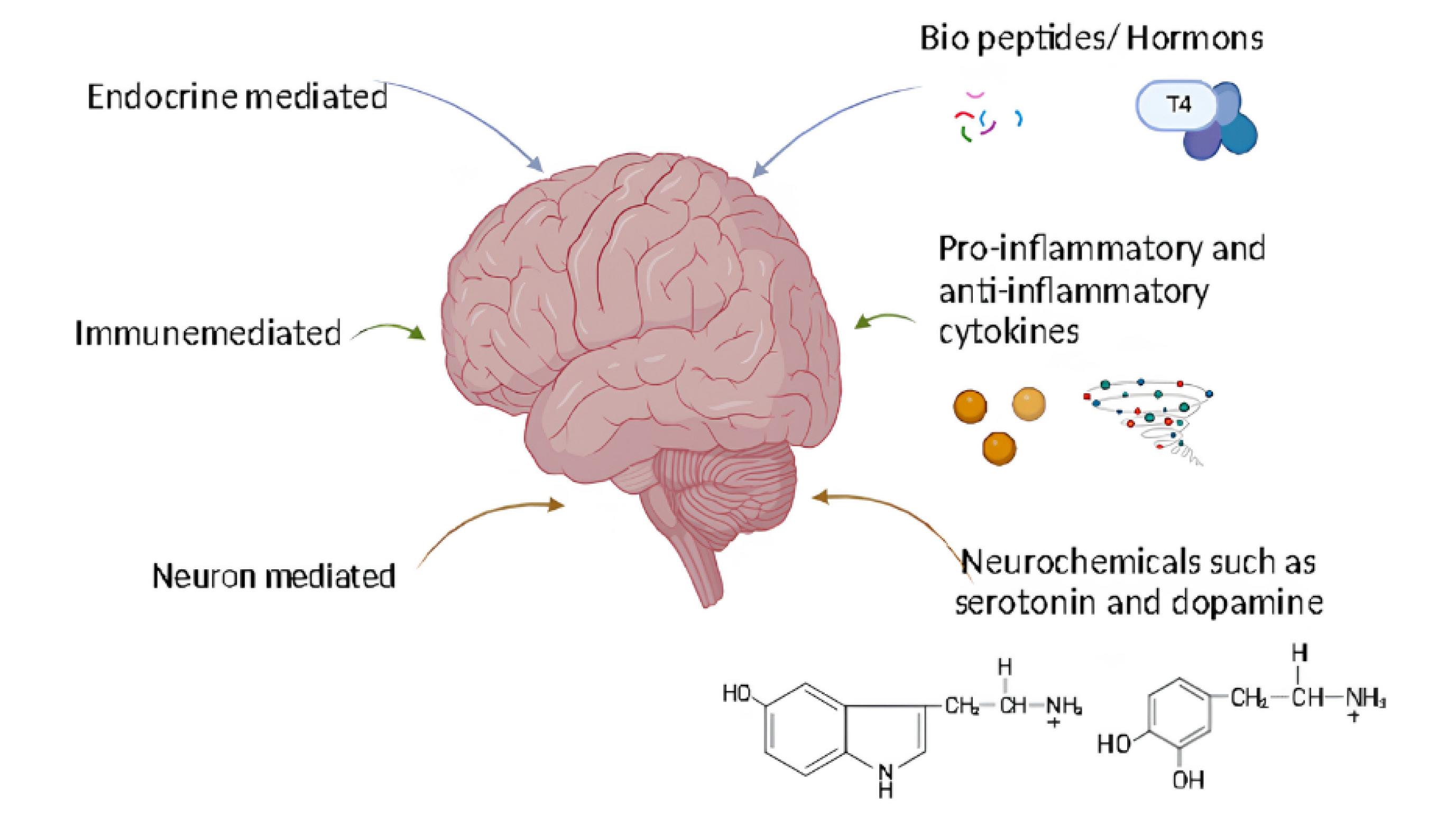
Figure 3.
Postbiotics’ roles in brain signaling include bioactive peptides, hormones, dopamine, GABA, epinephrine, norepinephrine, cytokines, antiadhesion, gut barrier improvements, 5-HT, and neurochemicals
.
Postbiotics’ roles in brain signaling include bioactive peptides, hormones, dopamine, GABA, epinephrine, norepinephrine, cytokines, antiadhesion, gut barrier improvements, 5-HT, and neurochemicals
The gut microbiome modulates the hypothalamic-pituitary-adrenal (HPA) axis, a critical component of the stress response. Dysbiosis in the gut microbiome can lead to sustained HPA axis activation, contributing to stress-related disorders. Postbiotics, by restoring microbial balance, may help re-establish HPA axis homeostasis. This modulation reduces cortisol levels and mitigates stress responses, supporting emotional regulation. Disruptions in the gut microbiome are also linked to increased pro-inflammatory cytokines, which are associated with psychiatric disorders.235-239 Targeting the HPA axis through postbiotics offers potential for managing mood disorders.
Understanding these interactions is vital for developing targeted interventions. This integrative approach holds promise for improving mental health outcomes and fostering emotional resilience. Postbiotics are characterized by their unique properties, making them suitable for therapeutic applications. Comprising metabolites, cell wall fragments, and fermentation products, postbiotics are stable at room temperature, unlike live probiotics.240,241
This stability enhances their commercial viability and ease of incorporation into treatment regimens. Their versatility makes them applicable to diverse populations, including those with mental disorders. The stability of postbiotics positions them as valuable candidates for innovative therapies.
The safety profile of postbiotics supports their use in clinical settings. Toxicological studies show low cytotoxicity and genotoxicity in human cell lines, with minimal adverse effects.240-242 These compounds are well-tolerated, even in vulnerable populations like cancer patients. Mild effects, if any, are typically transient, indicating a favorable safety profile. Ongoing research continues to validate the safety of postbiotics for regular consumption. This safety profile enhances their potential as therapeutic agents.
Regulatory perspectives on postbiotics vary, influencing their global application. The FDA and EFSA do not classify postbiotics as food additives or novel foods, simplifying pre-market evaluations.243,244 However, adherence to Good Manufacturing Practices (GMP) is critical to prevent microbial contamination during production. Compliance with local regulations ensures product safety and efficacy. These regulatory considerations are essential for the safe integration of postbiotics into health products.
Individual variability in response to postbiotics is a crucial factor for their clinical use. Factors such as age, health conditions, and medications can influence responses to postbiotics.243,244 While generally safe, individuals with specific health concerns should consult healthcare professionals before use. This personalized approach optimizes therapeutic outcomes. Tailoring postbiotic interventions to individual needs enhances their effectiveness in mental health treatment.
The long-term effects of postbiotics, particularly in mental health and oncology, warrant further investigation. Current evidence supports their safety for regular consumption, but prolonged use in specific populations, such as those with mental disorders, remains underexplored.240,241 Continued research is needed to understand the implications of extended use. Exploring these effects could unlock new therapeutic applications, including in oncology. Further studies will strengthen the evidence base for postbiotics’ clinical benefits.
The interplay between gut microbiota, postbiotics, and neural circuits highlights the complexity of mental health regulation. Microbial metabolites, including serotonin, dopamine, and norepinephrine, modulate neurotransmission, synaptic plasticity, and cognitive function.234 These compounds influence brain health through diverse biochemical pathways, including enteroendocrine hormones and cytokines. Ongoing research continues to elucidate these mechanisms, emphasizing the gut microbiome’s role in mental health. This integrative approach offers promising avenues for improving emotional resilience and mental health outcomes.
Conclusion
In summary, this review highlights the emerging significance of postbiotics as pivotal modulators of mental health, particularly in the context of depression, psychosis, and mania. The accumulating evidence suggests that these microbial metabolites exert a profound influence on mood regulation, anxiety modulation, and cognitive function through their interactions with key neurotransmitter systems and their capacity to modulate neuroinflammatory pathways. Given the increasing recognition of the gut-brain axis, it is essential to undertake further empirical investigations to substantiate these findings and elucidate the underlying mechanisms through which postbiotics mediate their psychological effects.
Future research should prioritize well-designed clinical trials assessing the efficacy of postbiotic interventions across diverse populations and a spectrum of mental health disorders. Incorporating postbiotics into existing therapeutic frameworks may provide innovative strategies to enhance patient outcomes and improve the quality of life for individuals affected by mental health conditions. This review advocates for a multidisciplinary approach that integrates microbiology, psychiatry, and nutritional science, thereby maximizing the therapeutic potential of postbiotics in mental health care. By advancing our understanding of the complex interplay between gut microbiota and psychological well-being, we can pave the way for novel and effective treatment modalities within the field of mental health.
Competing Interests
The authors declare no competing interests.
Data Availability of Statement
The data supporting the findings of this study are available within the article and its tables. Additional data may be available from the corresponding author upon reasonable request.
Ethical Approval
This study is a literature review and did not involve human or animal research. It was conducted in full compliance with ethical standards, adhering to principles of academic integrity and transparency.
Acknowledgements
This work was supported by the Research Vice-Chancellor of Tabriz University of Medical Sciences under Grant No. 75607. We express our gratitude to all individuals and institutions who contributed to the completion of this study.
References
- World Health Organization (WHO). Comprehensive Mental Health Action Plan 2013-2030. WHO; 2021. Available from: https://www.who.int/publications/i/item/9789240031029.
- Gilbert MS, Ijssennagger N, Kies AK, van Mil SW. Protein fermentation in the gut; implications for intestinal dysfunction in humans, pigs, and poultry. Am J Physiol Gastrointest Liver Physiol 2018; 315(2):G159-70. doi: 10.1152/ajpgi.00319.2017 [Crossref] [ Google Scholar]
- Homayouni Rad A, Akbarzadeh F, Vaghef Mehrabany E. Which are more important: prebiotics or probiotics?. Nutrition 2012; 28(11-12):1196-7. doi: 10.1016/j.nut.2012.03.017 [Crossref] [ Google Scholar]
- Homayouni Rad A, Torab R, Mortazavian AM, Vaghef Mehrabany E, Vaghef Mehrabany L. Can probiotics prevent or improve common cold and influenza?. Nutrition 2013; 29(5):805-6. doi: 10.1016/j.nut.2012.10.009 [Crossref] [ Google Scholar]
- Ejtahed HS, Mohtadi Nia J, Homayouni Rad A, Niafar M, Asghari Jafarabadi M, Mofid V. The effects of probiotic and conventional yoghurt on diabetes markers and insulin resistance in type 2 diabetic patients: a randomized controlled clinical trial. Iran J Endocrinol Metab 2011; 13(1):1-8. [ Google Scholar]
- Homayouni Rad A, Torab R, Ghalibaf M, Norouzi S, Vaghef Mehrabany E. Might patients with immune-related diseases benefit from probiotics?. Nutrition 2013; 29(3):583-6. doi: 10.1016/j.nut.2012.10.008 [Crossref] [ Google Scholar]
- Homayouni Rad A, Bagheri N, Mohammad-Alizadeh-Charandabi S, Kashani N, Mobaraki-Asl N, Mirghafurvand M. Prevention of gestational diabetes mellitus (GDM) and probiotics: mechanism of action: a review. Curr Diabetes Rev 2020; 16(6):538-45. doi: 10.2174/1573399815666190712193828 [Crossref] [ Google Scholar]
- Homayouni Rad A, Abbasalizadeh S, Vazifekhah S, Abbasalizadeh F, Hassanalilou T, Bastani P. The future of diabetes management by healthy probiotic microorganisms. Curr Diabetes Rev 2017; 13(6):582-9. doi: 10.2174/1573399812666161014112515 [Crossref] [ Google Scholar]
- Nabavi S, Rafraf M, Somi MH, Homayouni Rad A, Asghari Jafarabadi M. Probiotic yogurt improves body mass index and fasting insulin levels without affecting serum leptin and adiponectin levels in non-alcoholic fatty liver disease (NAFLD). J Funct Foods 2015; 18(Pt A):684-91. doi: 10.1016/j.jff.2015.08.031 [Crossref] [ Google Scholar]
- Cicenia A, Scirocco A, Carabotti M, Pallotta L, Marignani M, Severi C. Postbiotic activities of lactobacilli-derived factors. J Clin Gastroenterol 2014; 48 Suppl 1:S18-22. doi: 10.1097/mcg.0000000000000231 [Crossref] [ Google Scholar]
- Khalili M, Rad AH, Khosroushahi AY, Khosravi H, Jafarzadeh S. Application of Probiotics in Folate Bio-Fortification of Yoghurt. Probiotics Antimicrob Proteins 2020; 12(2):756-63. doi: 10.1007/s12602-019-09560-7 [Crossref] [ Google Scholar]
- Abbasi A, Aghebati Maleki L, Homayouni Rad A. The promising biological role of postbiotics derived from probiotic Lactobacillus species in reproductive health. Crit Rev Food Sci Nutr 2022; 62(32):8829-41. doi: 10.1080/10408398.2021.1935701 [Crossref] [ Google Scholar]
- Abbasi A, Homayouni Rad A, Ghasempour Z, Sabahi S, Samadi Kafil H, Hasannezhad P. The biological activities of postbiotics in gastrointestinal disorders. Crit Rev Food Sci Nutr 2022; 62(22):5983-6004. doi: 10.1080/10408398.2021.1895061 [Crossref] [ Google Scholar]
- Homayouni Rad A, Aghebati Maleki L, Samadi Kafil H, Fathi Zavoshti H, Abbasi A. Postbiotics as promising tools for cancer adjuvant therapy. Adv Pharm Bull 2021; 11(1):1-5. doi: 10.34172/apb.2021.007 [Crossref] [ Google Scholar]
- Homayouni Rad A, Mortazavian AM, Ghorbanzadeh Meshkani M, Hajipour N, Pourjafar H. Effect of Alyssum homolocarpum mucilage and inulin microencapsulation on the survivability of Lactobacillus casei in simulated gastrointestinal and high-temperature conditions. Biocatal Agric Biotechnol 2021; 35:102075. doi: 10.1016/j.bcab.2021.102075 [Crossref] [ Google Scholar]
- Mahmoudpour M, Kholafazad-Kordasht H, Ezzati Nazhad Dolatabadi J, Hasanzadeh M, Homayouni Rad A, Torbati M. Sensitive aptasensing of ciprofloxacin residues in raw milk samples using reduced graphene oxide and nanogold-functionalized poly(amidoamine) dendrimer: an innovative apta-platform towards electroanalysis of antibiotics. Anal Chim Acta 2021; 1174:338736. doi: 10.1016/j.aca.2021.338736 [Crossref] [ Google Scholar]
- Godarzi H, Mohammadifar MA, Homayouni Rad A, Rasouli Pirouzian H, Ansari F, Pourjafar H. Physicochemical properties of oil in water emulsions prepared with irradiated gum tragacanth in acidic conditions. J Food Meas Charact 2021; 15(5):4735-46. doi: 10.1007/s11694-021-01052-z [Crossref] [ Google Scholar]
- Alanchari M, Mohammadi M, Yazdian F, Ahangari H, Ahmadi N, Emam-Djomeh Z. Optimization and antimicrobial efficacy of curcumin loaded solid lipid nanoparticles against foodborne bacteria in hamburger patty. J Food Sci 2021; 86(6):2242-54. doi: 10.1111/1750-3841.15732 [Crossref] [ Google Scholar]
- Asgharian H, Homayouni Rad A, Mirghafourvand M, Mohammad-Alizadeh-Charandabi S. Effect of probiotic yoghurt on plasma glucose in overweight and obese pregnant women: a randomized controlled clinical trial. Eur J Nutr 2020; 59(1):205-15. doi: 10.1007/s00394-019-01900-1 [Crossref] [ Google Scholar]
- Homayouni Rad A, Abbasi A, Samadi Kafil H, Ganbarov K. Potential pharmaceutical and food applications of postbiotics: a review. Curr Pharm Biotechnol 2020; 21(15):1576-87. doi: 10.2174/1389201021666200516154833 [Crossref] [ Google Scholar]
- Thorakkattu P, Khanashyam AC, Shah K, Babu KS, Mundanat AS, Deliephan A. Postbiotics: current trends in food and pharmaceutical industry. Foods 2022; 11(19):3094. doi: 10.3390/foods11193094 [Crossref] [ Google Scholar]
- Kamalledin Moghadam S, Farhoodi M, Mofid V, Homayouni Rad A, Mortazavian AM, Milani Bonab A. Effects of adding non-viable Lacticaseibacilluscasei and Lactobacillus acidophilus on physicochemical, microbial, chemical and sensory attributes of probiotic Doogh. Appl Food Biotechnol 2024; 11(1):e14. doi: 10.22037/afb.v11i1.44105 [Crossref] [ Google Scholar]
- Bonfili L, Cecarini V, Gogoi O, Berardi S, Scarpona S, Angeletti M. Gut microbiota manipulation through probiotics oral administration restores glucose homeostasis in a mouse model of Alzheimer’s disease. Neurobiol Aging 2020; 87:35-43. doi: 10.1016/j.neurobiolaging.2019.11.004 [Crossref] [ Google Scholar]
- Castelli V, d’Angelo M, Lombardi F, Alfonsetti M, Antonosante A, Catanesi M. Effects of the probiotic formulation SLAB51 in in vitro and in vivo Parkinson’s disease models. Aging (Albany NY) 2020; 12(5):4641-59. doi: 10.18632/aging.102927 [Crossref] [ Google Scholar]
- Barthelmes J, Tafferner N, Kurz J, de Bruin N, Parnham MJ, Geisslinger G, et al. Induction of experimental autoimmune encephalomyelitis in mice and evaluation of the disease-dependent distribution of immune cells in various tissues. J Vis Exp 2016(111):53933. doi: 10.3791/53933.
- Tankou SK, Regev K, Healy BC, Tjon E, Laghi L, Cox LM. A probiotic modulates the microbiome and immunity in multiple sclerosis. Ann Neurol 2018; 83(6):1147-61. doi: 10.1002/ana.25244 [Crossref] [ Google Scholar]
- Kouchaki E, Tamtaji OR, Salami M, Bahmani F, Daneshvar Kakhaki R, Akbari E. Clinical and metabolic response to probiotic supplementation in patients with multiple sclerosis: a randomized, double-blind, placebo-controlled trial. Clin Nutr 2017; 36(5):1245-9. doi: 10.1016/j.clnu.2016.08.015 [Crossref] [ Google Scholar]
- Kang DW, Park JG, Ilhan ZE, Wallstrom G, Labaer J, Adams JB. Reduced incidence of Prevotella and other fermenters in intestinal microflora of autistic children. PLoS One 2013; 8(7):e68322. doi: 10.1371/journal.pone.0068322 [Crossref] [ Google Scholar]
- Kałużna-Czaplińska J, Błaszczyk S. The level of arabinitol in autistic children after probiotic therapy. Nutrition 2012; 28(2):124-6. doi: 10.1016/j.nut.2011.08.002 [Crossref] [ Google Scholar]
- Tomova A, Husarova V, Lakatosova S, Bakos J, Vlkova B, Babinska K. Gastrointestinal microbiota in children with autism in Slovakia. Physiol Behav 2015; 138:179-87. doi: 10.1016/j.physbeh.2014.10.033 [Crossref] [ Google Scholar]
-
Bercik P, Denou E, Collins J, Jackson W, Lu J, Jury J, et al. The intestinal microbiota affect central levels of brain-derived neurotropic factor and behavior in mice. Gastroenterology 2011;141(2):599-609.e3. doi: 10.1053/j.gastro.2011.04.052.
- Szeligowski T, Yun AL, Lennox BR, Burnet PW. The gut microbiome and schizophrenia: the current state of the field and clinical applications. Front Psychiatry 2020; 11:156. doi: 10.3389/fpsyt.2020.00156 [Crossref] [ Google Scholar]
- Segawa S, Wakita Y, Hirata H, Watari J. Oral administration of heat-killed Lactobacillus brevis SBC8803 ameliorates alcoholic liver disease in ethanol-containing diet-fed C57BL/6N mice. Int J Food Microbiol 2008; 128(2):371-7. doi: 10.1016/j.ijfoodmicro.2008.09.023 [Crossref] [ Google Scholar]
- Kwak DS, Jun DW, Seo JG, Chung WS, Park SE, Lee KN. Short-term probiotic therapy alleviates small intestinal bacterial overgrowth, but does not improve intestinal permeability in chronic liver disease. Eur J Gastroenterol Hepatol 2014; 26(12):1353-9. doi: 10.1097/meg.0000000000000214 [Crossref] [ Google Scholar]
- Pärtty A, Lehtonen L, Kalliomäki M, Salminen S, Isolauri E. Probiotic Lactobacillus rhamnosus GG therapy and microbiological programming in infantile colic: a randomized, controlled trial. Pediatr Res 2015; 78(4):470-5. doi: 10.1038/pr.2015.127 [Crossref] [ Google Scholar]
- Kumperscak HG, Gricar A, Ülen I, Micetic-Turk D. A pilot randomized control trial with the probiotic strain Lactobacillus rhamnosus GG (LGG) in ADHD: children and adolescents report better health-related quality of life. Front Psychiatry 2020; 11:181. doi: 10.3389/fpsyt.2020.00181 [Crossref] [ Google Scholar]
- Kambe J, Watcharin S, Makioka-Itaya Y, Inoue R, Watanabe G, Yamaguchi H. Heat-killed Enterococcus fecalis (EC-12) supplement alters the expression of neurotransmitter receptor genes in the prefrontal cortex and alleviates anxiety-like behavior in mice. Neurosci Lett 2020; 720:134753. doi: 10.1016/j.neulet.2020.134753 [Crossref] [ Google Scholar]
- Warda AK, Rea K, Fitzgerald P, Hueston C, Gonzalez-Tortuero E, Dinan TG. Heat-killed lactobacilli alter both microbiota composition and behaviour. Behav Brain Res 2019; 362:213-23. doi: 10.1016/j.bbr.2018.12.047 [Crossref] [ Google Scholar]
- Maehata H, Arai S, Iwabuchi N, Abe F. Immuno-modulation by heat-killed Lacticaseibacillusparacasei MCC1849 and its application to food products. Int J Immunopathol Pharmacol 2021; 35:20587384211008291. doi: 10.1177/20587384211008291 [Crossref] [ Google Scholar]
- Nishida K, Sawada D, Kuwano Y, Tanaka H, Rokutan K. Health benefits of Lactobacillus gasseri CP2305 tablets in young adults exposed to chronic stress: a randomized, double-blind, placebo-controlled study. Nutrients 2019; 11(8):1859. doi: 10.3390/nu11081859 [Crossref] [ Google Scholar]
- Yun SW, Kim JK, Han MJ, Kim DH. Lacticaseibacillusparacasei NK112 mitigates Escherichia coli-induced depression and cognitive impairment in mice by regulating IL-6 expression and gut microbiota. Benef Microbes 2021; 12(6):541-51. doi: 10.3920/bm2020.0109 [Crossref] [ Google Scholar]
- Nishida K, Sawada D, Kuwano Y, Tanaka H, Sugawara T, Aoki Y. Daily administration of paraprobiotic Lactobacillus gasseri CP2305 ameliorates chronic stress-associated symptoms in Japanese medical students. J Funct Foods 2017; 36:112-21. doi: 10.1016/j.jff.2017.06.031 [Crossref] [ Google Scholar]
- Maehata H, Kobayashi Y, Mitsuyama E, Kawase T, Kuhara T, Xiao JZ. Heat-killed Lactobacillus helveticus strain MCC1848 confers resilience to anxiety or depression-like symptoms caused by subchronic social defeat stress in mice. Biosci Biotechnol Biochem 2019; 83(7):1239-47. doi: 10.1080/09168451.2019.1591263 [Crossref] [ Google Scholar]
- Wei CL, Wang S, Yen JT, Cheng YF, Liao CL, Hsu CC. Antidepressant-like activities of live and heat-killed Lactobacillus paracasei PS23 in chronic corticosterone-treated mice and possible mechanisms. Brain Res 2019; 1711:202-13. doi: 10.1016/j.brainres.2019.01.025 [Crossref] [ Google Scholar]
- Mutoh N, Kakiuchi I, Hiraku A, Iwabuchi N, Kiyosawa K, Igarashi K. Heat-killed Lactobacillus helveticus improves mood states: a randomised, double-blind, placebo-controlled study. Benef Microbes 2023; 14(2):109-18. doi: 10.3920/bm2022.0048 [Crossref] [ Google Scholar]
- Żmudzka E, Sałaciak K, Sapa J, Pytka K. Serotonin receptors in depression and anxiety: Insights from animal studies. Life Sci 2018; 210:106-24. doi: 10.1016/j.lfs.2018.08.050 [Crossref] [ Google Scholar]
- Stahl SM. Mixed depression and anxiety: serotonin1A receptors as a common pharmacologic link. J Clin Psychiatry 1997; 58 Suppl 8:20-6. [ Google Scholar]
- Beck AT, Alford BA. Depression: Causes and Treatment. University of Pennsylvania Press; 2009.
- Stein M, Miller AH, Trestman RL. Depression, the immune system, and health and illness Findings in search of meaning. Arch Gen Psychiatry 1991; 48(2):171-7. doi: 10.1001/archpsyc.1991.01810260079012 [Crossref] [ Google Scholar]
- Steger MF, Mann JR, Michels P, Cooper TC. Meaning in life, anxiety, depression, and general health among smoking cessation patients. J Psychosom Res 2009; 67(4):353-8. doi: 10.1016/j.jpsychores.2009.02.006 [Crossref] [ Google Scholar]
- World Health Organization (WHO). Depressive Disorder (Depression). WHO; 2023. Available from: https://www.who.int/news-room/fact-sheets/detail/depression.
- Qureshi NA, Al-Bedah AM. Mood disorders and complementary and alternative medicine: a literature review. Neuropsychiatr Dis Treat 2013; 9:639-58. doi: 10.2147/ndt.S43419 [Crossref] [ Google Scholar]
- Dobson ET, Croarkin PE, Schroeder HK, Varney ST, Mossman SA, Cecil K. Bridging anxiety and depression: a network approach in anxious adolescents. J Affect Disord 2021; 280(Pt A):305-14. doi: 10.1016/j.jad.2020.11.027 [Crossref] [ Google Scholar]
- Madison A, Kiecolt-Glaser JK. Stress, depression, diet, and the gut microbiota: human-bacteria interactions at the core of psychoneuroimmunology and nutrition. Curr Opin Behav Sci 2019; 28:105-10. doi: 10.1016/j.cobeha.2019.01.011 [Crossref] [ Google Scholar]
- Liaqat H, Parveen A, Kim SY. Antidepressive effect of natural products and their derivatives targeting BDNF-TrkB in gut-brain axis. Int J Mol Sci 2022; 23(23):14968. doi: 10.3390/ijms232314968 [Crossref] [ Google Scholar]
- Zhang M, Shi Z, Wu C, Yang F, Su T, Jing X. Cushing syndrome is associated with gut microbial dysbiosis and cortisol-degrading bacteria. J Clin Endocrinol Metab 2024; 109(6):1474-84. doi: 10.1210/clinem/dgad766 [Crossref] [ Google Scholar]
- Dziurkowska E, Wesolowski M. Cortisol as a biomarker of mental disorder severity. J Clin Med 2021; 10(21):5204. doi: 10.3390/jcm10215204 [Crossref] [ Google Scholar]
- Correia AS, Cardoso A, Vale N. BDNF unveiled: exploring its role in major depression disorder serotonergic imbalance and associated stress conditions. Pharmaceutics 2023; 15(8):2081. doi: 10.3390/pharmaceutics15082081 [Crossref] [ Google Scholar]
- Sim AT, White MD, Denborough MA. The effect of oxytocin on porcine malignant hyperpyrexia susceptible skeletal muscle. Clin Exp Pharmacol Physiol 1987; 14(7):605-10. doi: 10.1111/j.1440-1681.1987.tb01880.x [Crossref] [ Google Scholar]
- Brunoni AR, Lopes M, Fregni F. A systematic review and meta-analysis of clinical studies on major depression and BDNF levels: implications for the role of neuroplasticity in depression. Int J Neuropsychopharmacol 2008; 11(8):1169-80. doi: 10.1017/s1461145708009309 [Crossref] [ Google Scholar]
- Correia AS, Vale N. Advancements exploring major depressive disorder: insights on oxidative stress, serotonin metabolism, BDNF, HPA axis dysfunction, and pharmacotherapy advances. Int J Transl Med 2024; 4(1):176-96. doi: 10.3390/ijtm4010010 [Crossref] [ Google Scholar]
- Ritz NL, Draper LA, Bastiaanssen TFS, Turkington CJR, Peterson VL, van de Wouw M. The gut virome is associated with stress-induced changes in behaviour and immune responses in mice. Nat Microbiol 2024; 9(2):359-76. doi: 10.1038/s41564-023-01564-y [Crossref] [ Google Scholar]
-
Gonbari Milani P, Vadaei S, Nazari A, Farimah Rezaie F, Abedi Soleimani R, Homayouni Rad A. Anxiety and depression during the COVID-19 pandemic: Role of the gut-brain axis, Gastrointestinal Nursing 2023;21(10):18-24. doi: 10.12968/gasn.2024.21.10.
- Foster JA, Baker GB, Dursun SM. The relationship between the gut microbiome-immune system-brain axis and major depressive disorder. Front Neurol 2021; 12:721126. doi: 10.3389/fneur.2021.721126 [Crossref] [ Google Scholar]
- Singh J, Vanlallawmzuali Vanlallawmzuali, Singh A, Biswal S, Zomuansangi R, Lalbiaktluangi C. Microbiota-brain axis: exploring the role of gut microbiota in psychiatric disorders - a comprehensive review. Asian J Psychiatr 2024; 97:104068. doi: 10.1016/j.ajp.2024.104068 [Crossref] [ Google Scholar]
- Dhaliwal GK. Alistipes: the influence of a commensal on anxiety and depression. Catalyst (San Diego) 2019; 3(1):2-10. [ Google Scholar]
- Khom S, Baburin I, Timin E, Hohaus A, Trauner G, Kopp B. Valerenic acid potentiates and inhibits GABA(A) receptors: molecular mechanism and subunit specificity. Neuropharmacology 2007; 53(1):178-87. doi: 10.1016/j.neuropharm.2007.04.018 [Crossref] [ Google Scholar]
- Bravo JA, Forsythe P, Chew MV, Escaravage E, Savignac HM, Dinan TG. Ingestion of Lactobacillus strain regulates emotional behavior and central GABA receptor expression in a mouse via the vagus nerve. Proc Natl Acad Sci U S A 2011; 108(38):16050-5. doi: 10.1073/pnas.1102999108 [Crossref] [ Google Scholar]
- Carreno FR, Frazer A. Vagal nerve stimulation for treatment-resistant depression. Neurotherapeutics 2017; 14(3):716-27. doi: 10.1007/s13311-017-0537-8 [Crossref] [ Google Scholar]
- Wallace CJ, Milev RV. The efficacy, safety, and tolerability of probiotics on depression: clinical results from an open-label pilot study. Front Psychiatry 2021; 12:618279. doi: 10.3389/fpsyt.2021.618279 [Crossref] [ Google Scholar]
- Engevik MA, Luck B, Visuthranukul C, Ihekweazu FD, Engevik AC, Shi Z. Human-derived Bifidobacterium dentium modulates the mammalian serotonergic system and gut-brain axis. Cell Mol Gastroenterol Hepatol 2021; 11(1):221-48. doi: 10.1016/j.jcmgh.2020.08.002 [Crossref] [ Google Scholar]
- Hou Y, Li J, Ying S. Tryptophan metabolism and gut microbiota: a novel regulatory axis integrating the microbiome, immunity, and cancer. Metabolites 2023; 13(11):1166. doi: 10.3390/metabo13111166 [Crossref] [ Google Scholar]
- Tsuji A, Ikeda Y, Yoshikawa S, Taniguchi K, Sawamura H, Morikawa S. The tryptophan and kynurenine pathway involved in the development of immune-related diseases. Int J Mol Sci 2023; 24(6):5742. doi: 10.3390/ijms24065742 [Crossref] [ Google Scholar]
- Colica C, Avolio E, Bollero P, Costa de Miranda R, Ferraro S, Sinibaldi Salimei P. Evidences of a new psychobiotic formulation on body composition and anxiety. Mediators Inflamm 2017; 2017:5650627. doi: 10.1155/2017/5650627 [Crossref] [ Google Scholar]
- Messaoudi M, Lalonde R, Violle N, Javelot H, Desor D, Nejdi A. Assessment of psychotropic-like properties of a probiotic formulation (Lactobacillus helveticus R0052 and Bifidobacterium longum R0175) in rats and human subjects. Br J Nutr 2011; 105(5):755-64. doi: 10.1017/s0007114510004319 [Crossref] [ Google Scholar]
- Wu Y, Wang Y, Hu A, Shu X, Huang W, Liu J. Lactobacillus plantarum-derived postbiotics prevent Salmonella-induced neurological dysfunctions by modulating gut-brain axis in mice. Front Nutr 2022; 9:946096. doi: 10.3389/fnut.2022.946096 [Crossref] [ Google Scholar]
-
Cortés AS. Diagnostic and Statistical Manual of Mental Disorders, Fifth Edition, Text Revision (DSM-5-TR). American Psychiatric Association; 2022. doi: 10.1176/appi.books.9780890425787.
- Penn DL, Waldheter EJ, Perkins DO, Mueser KT, Lieberman JA. Psychosocial treatment for first-episode psychosis: a research update. Am J Psychiatry 2005; 162(12):2220-32. doi: 10.1176/appi.ajp.162.12.2220 [Crossref] [ Google Scholar]
- Martinetz S, Neumann ID. The potential of oxytocin as a therapeutic target for psychiatric disorders. Expert Opin Ther Targets 2016; 20(5):515-8. doi: 10.1517/14728222.2016.1129403 [Crossref] [ Google Scholar]
- Kesby JP, Eyles DW, McGrath JJ, Scott JG. Dopamine, psychosis and schizophrenia: the widening gap between basic and clinical neuroscience. Transl Psychiatry 2018; 8(1):30. doi: 10.1038/s41398-017-0071-9 [Crossref] [ Google Scholar]
- Pollak TA, McCormack R, Peakman M, Nicholson TR, David AS. Prevalence of anti-N-methyl-D-aspartate (NMDA) receptor [corrected] antibodies in patients with schizophrenia and related psychoses: a systematic review and meta-analysis. Psychol Med 2014; 44(12):2475-87. doi: 10.1017/s003329171300295x [Crossref] [ Google Scholar]
- Sarter M, Bruno JP. Cortical acetylcholine, reality distortion, schizophrenia, and Lewy body dementia: too much or too little cortical acetylcholine?. Brain Cogn 1998; 38(3):297-316. doi: 10.1006/brcg.1998.1035 [Crossref] [ Google Scholar]
- Huang S, Mao J, Zhou L, Xiong X, Deng Y. The imbalance of gut microbiota and its correlation with plasma inflammatory cytokines in pemphigus vulgaris patients. Scand J Immunol 2019; 90(3):e12799. doi: 10.1111/sji.12799 [Crossref] [ Google Scholar]
- Caldiroli A, Capuzzi E, Barkin JL, Grassi S, Esposito CM, Auxilia AM. Is there an association between inflammatory/anti-oxidant markers and the presence of psychotic symptoms or severity of illness in mood and psychotic disorders? A multi-centric study on a drug-free sample. Brain Behav Immun Health 2022; 22:100453. doi: 10.1016/j.bbih.2022.100453 [Crossref] [ Google Scholar]
- Ng QX, Soh AY, Venkatanarayanan N, Ho CY, Lim DY, Yeo WS. A systematic review of the effect of probiotic supplementation on schizophrenia symptoms. Neuropsychobiology 2019; 78(1):1-6. doi: 10.1159/000498862 [Crossref] [ Google Scholar]
- Tomasik J, Yolken RH, Bahn S, Dickerson FB. Immunomodulatory effects of probiotic supplementation in schizophrenia patients: a randomized, placebo-controlled trial. Biomark Insights 2015; 10:47-54. doi: 10.4137/bmi.S22007 [Crossref] [ Google Scholar]
- Raefsky SM, Mattson MP. Adaptive responses of neuronal mitochondria to bioenergetic challenges: Roles in neuroplasticity and disease resistance. Free Radic Biol Med 2017; 102:203-16. doi: 10.1016/j.freeradbiomed.2016.11.045 [Crossref] [ Google Scholar]
- Durany N, Michel T, Zöchling R, Boissl KW, Cruz-Sánchez FF, Riederer P. Brain-derived neurotrophic factor and neurotrophin 3 in schizophrenic psychoses. Schizophr Res 2001; 52(1-2):79-86. doi: 10.1016/s0920-9964(00)00084-0 [Crossref] [ Google Scholar]
- Nagamine T, Sato N, Seo GI. Probiotics reduce negative symptoms of schizophrenia: a case report. Int Med J 2012; 19(1):72-3. [ Google Scholar]
- Jamilian H, Ghaderi A. The effects of probiotic and selenium co-supplementation on clinical and metabolic scales in chronic schizophrenia: a randomized, double-blind, placebo-controlled trial. Biol Trace Elem Res 2021; 199(12):4430-8. doi: 10.1007/s12011-020-02572-3 [Crossref] [ Google Scholar]
- Yang AC, Tsai SJ. New targets for schizophrenia treatment beyond the dopamine hypothesis. Int J Mol Sci 2017; 18(8):1689. doi: 10.3390/ijms18081689 [Crossref] [ Google Scholar]
- Goh KK, Chen CH, Lane HY. Oxytocin in schizophrenia: pathophysiology and implications for future treatment. Int J Mol Sci 2021; 22(4):2146. doi: 10.3390/ijms22042146 [Crossref] [ Google Scholar]
- Swann AC, Moeller FG, Steinberg JL, Schneider L, Barratt ES, Dougherty DM. Manic symptoms and impulsivity during bipolar depressive episodes. Bipolar Disord 2007; 9(3):206-12. doi: 10.1111/j.1399-5618.2007.00357.x [Crossref] [ Google Scholar]
- Pacchiarotti I, Anmella G, Colomer L, Vieta E. How to treat mania. Acta Psychiatr Scand 2020; 142(3):173-92. doi: 10.1111/acps.13209 [Crossref] [ Google Scholar]
- Dubovsky SL. Mania. Continuum (Minneap Minn) 2015; 21(3):737-55. doi: 10.1212/01.CON.0000466663.28026.6f [Crossref] [ Google Scholar]
- Loonen AJM, Kupka RW, Ivanova SA. Circuits regulating pleasure and happiness in bipolar disorder. Front Neural Circuits 2017; 11:35. doi: 10.3389/fncir.2017.00035 [Crossref] [ Google Scholar]
- Klein M. Mourning and its relation to manic-depressive states. Int J Psychoanal 1940; 21(1):125-53. [ Google Scholar]
- Lee JG, Woo YS, Park SW, Seog DH, Seo MK, Bahk WM. Neuromolecular etiology of bipolar disorder: possible therapeutic targets of mood stabilizers. Clin Psychopharmacol Neurosci 2022; 20(2):228-39. doi: 10.9758/cpn.2022.20.2.228 [Crossref] [ Google Scholar]
- Russo M, Calisi D, De Rosa MA, Evangelista G, Consoli S, Dono F. COVID-19 and first manic episodes: a systematic review. Psychiatry Res 2022; 314:114677. doi: 10.1016/j.psychres.2022.114677 [Crossref] [ Google Scholar]
- Hammen CL. Stress and depression: old questions, new approaches. Curr Opin Psychol 2015; 4:80-5. doi: 10.1016/j.copsyc.2014.12.024 [Crossref] [ Google Scholar]
- Rezin GT, Amboni G, Zugno AI, Quevedo J, Streck EL. Mitochondrial dysfunction and psychiatric disorders. Neurochem Res 2009; 34(6):1021-9. doi: 10.1007/s11064-008-9865-8 [Crossref] [ Google Scholar]
- Khambadkone SG, Cordner ZA, Dickerson F, Severance EG, Prandovszky E, Pletnikov M. Nitrated meat products are associated with mania in humans and altered behavior and brain gene expression in rats. Mol Psychiatry 2020; 25(3):560-71. doi: 10.1038/s41380-018-0105-6 [Crossref] [ Google Scholar]
- Kunze WA, Mao YK, Wang B, Huizinga JD, Ma X, Forsythe P. Lactobacillus reuteri enhances excitability of colonic AH neurons by inhibiting calcium-dependent potassium channel opening. J Cell Mol Med 2009; 13(8b):2261-70. doi: 10.1111/j.1582-4934.2009.00686.x [Crossref] [ Google Scholar]
- Khoshdel A, Verdu EF, Kunze W, McLean P, Bergonzelli G, Huizinga JD. Bifidobacterium longum NCC 3001 inhibits AH neuron excitability. Neurogastroenterol Motil 2013; 25(7):e478-84. doi: 10.1111/nmo.12147 [Crossref] [ Google Scholar]
- Perez-Burgos A, Wang B, Mao YK, Mistry B, McVey Neufeld KA, Bienenstock J. Psychoactive bacteria Lactobacillus rhamnosus (JB-1) elicits rapid frequency facilitation in vagal afferents. Am J Physiol Gastrointest Liver Physiol 2013; 304(2):G211-20. doi: 10.1152/ajpgi.00128.2012 [Crossref] [ Google Scholar]
- Benton D, Williams C, Brown A. Impact of consuming a milk drink containing a probiotic on mood and cognition. Eur J Clin Nutr 2007; 61(3):355-61. doi: 10.1038/sj.ejcn.1602546 [Crossref] [ Google Scholar]
- Ojeda J, Ávila A, Vidal PM. Gut microbiota interaction with the central nervous system throughout life. J Clin Med 2021; 10(6):1299. doi: 10.3390/jcm10061299 [Crossref] [ Google Scholar]
- Macciò A, Madeddu C, Chessa P, Panzone F, Lissoni P, Mantovani G. Oxytocin both increases proliferative response of peripheral blood lymphomonocytes to phytohemagglutinin and reverses immunosuppressive estrogen activity. In Vivo 2010; 24(2):157-63. [ Google Scholar]
- Loh TC, Choe DW, Foo HL, Sazili AQ, Bejo MH. Effects of feeding different postbiotic metabolite combinations produced by Lactobacillus plantarum strains on egg quality and production performance, faecal parameters and plasma cholesterol in laying hens. BMC Vet Res 2014; 10:149. doi: 10.1186/1746-6148-10-149 [Crossref] [ Google Scholar]
- El Masry BH. Impact of Dietary Lactobacillus plantarum Postbiotics on Performance of Layer Hens under Heat Stress Conditions [dissertation]. Beirut: American University of Beirut; 2023.
- Leo A, De Caro C, Mainardi P, Tallarico M, Nesci V, Marascio N. Increased efficacy of combining prebiotic and postbiotic in mouse models relevant to autism and depression. Neuropharmacology 2021; 198:108782. doi: 10.1016/j.neuropharm.2021.108782 [Crossref] [ Google Scholar]
- Chan KW, Hebert J, Radford-Smith D, Anthony DC, Burnet PWJ. Live or heat-killed probiotic administration reduces anxiety and central cytokine expression in BALB/c mice, but differentially alters brain neurotransmitter gene expression. Neuropharmacology 2023; 235:109565. doi: 10.1016/j.neuropharm.2023.109565 [Crossref] [ Google Scholar]
- Kato T. Current understanding of bipolar disorder: toward integration of biological basis and treatment strategies. Psychiatry Clin Neurosci 2019; 73(9):526-40. doi: 10.1111/pcn.12852 [Crossref] [ Google Scholar]
-
Park SC, Shen WW. Medication for depression: monoamine enhancers and esketamine (antidepressants). In: Tasman A, Riba MB, Alarcón RD, Alfonso CA, Kanba S, Ndetei DM, et al, eds. Tasman’s Psychiatry. Cham: Springer International Publishing; 2020. p. 1-53. doi: 10.1007/978-3-030-42825-9_133-1.
- Fasano A, Flaherty S. Gut Feelings: The Microbiome and Our Health. MIT Press; 2022.
- Dinan TG, Cryan JF. The microbiome-gut-brain axis in health and disease. Gastroenterol Clin North Am 2017; 46(1):77-89. doi: 10.1016/j.gtc.2016.09.007 [Crossref] [ Google Scholar]
- Berding K, Donovan SM. Microbiome and nutrition in autism spectrum disorder: current knowledge and research needs. Nutr Rev 2016; 74(12):723-36. doi: 10.1093/nutrit/nuw048 [Crossref] [ Google Scholar]
- Wang Y, Li N, Yang JJ, Zhao DM, Chen B, Zhang GQ. Probiotics and fructo-oligosaccharide intervention modulate the microbiota-gut brain axis to improve autism spectrum reducing also the hyper-serotonergic state and the dopamine metabolism disorder. Pharmacol Res 2020; 157:104784. doi: 10.1016/j.phrs.2020.104784 [Crossref] [ Google Scholar]
- Rehman MU, Ghazanfar S, Ul Haq R, Ullah S, Khan S, Wu J. Probiotics (Bacillus clausii and Lactobacillus fermentum NMCC-14) ameliorate stress behavior in mice by increasing monoamine levels and mRNA expression of dopamine receptors (D1 and D2) and synaptophysin. Front Pharmacol 2022; 13:915595. doi: 10.3389/fphar.2022.915595 [Crossref] [ Google Scholar]
- Liu G, Chong HX, Chung FY, Li Y, Liong MT. Lactobacillus plantarum DR7 modulated bowel movement and gut microbiota associated with dopamine and serotonin pathways in stressed adults. Int J Mol Sci 2020; 21(13):4608. doi: 10.3390/ijms21134608 [Crossref] [ Google Scholar]
- Beilharz JE, Kaakoush NO, Maniam J, Morris MJ. Cafeteria diet and probiotic therapy: cross talk among memory, neuroplasticity, serotonin receptors and gut microbiota in the rat. Mol Psychiatry 2018; 23(2):351-61. doi: 10.1038/mp.2017.38 [Crossref] [ Google Scholar]
- Ibrahim YM, Kearney SM, Levkovich T, Springer A, Mirabal S, Poutahidis T. Maternal gut microbes control offspring sex and survival. J Probiotics Health 2014; 2(1):120. doi: 10.4172/2329-8901.1000120 [Crossref] [ Google Scholar]
- Kong XJ, Liu J, Liu K, Koh M, Sherman H, Liu S. Probiotic and oxytocin combination therapy in patients with autism spectrum disorder: a randomized, double-blinded, placebo-controlled pilot trial. Nutrients 2021; 13(5):1552. doi: 10.3390/nu13051552 [Crossref] [ Google Scholar]
- Poutahidis T, Kearney SM, Levkovich T, Qi P, Varian BJ, Lakritz JR. Microbial symbionts accelerate wound healing via the neuropeptide hormone oxytocin. PLoS One 2013; 8(10):e78898. doi: 10.1371/journal.pone.0078898 [Crossref] [ Google Scholar]
- Homayouni Rad A. Letter to the editor. Food Chem 2009; 114(3):1073. doi: 10.1016/j.foodchem.2008.10.012 [Crossref] [ Google Scholar]
- Blaak EE, Canfora EE, Theis S, Frost G, Groen AK, Mithieux G. Short chain fatty acids in human gut and metabolic health. Benef Microbes 2020; 11(5):411-55. doi: 10.3920/bm2020.0057 [Crossref] [ Google Scholar]
- Koh A, De Vadder F, Kovatcheva-Datchary P, Bäckhed F. From dietary fiber to host physiology: short-chain fatty acids as key bacterial metabolites. Cell 2016; 165(6):1332-45. doi: 10.1016/j.cell.2016.05.041 [Crossref] [ Google Scholar]
- Wrzosek L, Miquel S, Noordine ML, Bouet S, Joncquel Chevalier-Curt M, Robert V. Bacteroides thetaiotaomicron and Faecalibacteriumprausnitzii influence the production of mucus glycans and the development of goblet cells in the colonic epithelium of a gnotobiotic model rodent. BMC Biol 2013; 11:61. doi: 10.1186/1741-7007-11-61 [Crossref] [ Google Scholar]
- Fukuda S, Toh H, Hase K, Oshima K, Nakanishi Y, Yoshimura K. Bifidobacteria can protect from enteropathogenic infection through production of acetate. Nature 2011; 469(7331):543-7. doi: 10.1038/nature09646 [Crossref] [ Google Scholar]
- Atarashi K, Tanoue T, Oshima K, Suda W, Nagano Y, Nishikawa H. Treg induction by a rationally selected mixture of Clostridia strains from the human microbiota. Nature 2013; 500(7461):232-6. doi: 10.1038/nature12331 [Crossref] [ Google Scholar]
- Smith PM, Howitt MR, Panikov N, Michaud M, Gallini CA, Bohlooly YM. The microbial metabolites, short-chain fatty acids, regulate colonic Treg cell homeostasis. Science 2013; 341(6145):569-73. doi: 10.1126/science.1241165 [Crossref] [ Google Scholar]
- Wu X, Wu Y, He L, Wu L, Wang X, Liu Z. Effects of the intestinal microbial metabolite butyrate on the development of colorectal cancer. J Cancer 2018; 9(14):2510-7. doi: 10.7150/jca.25324 [Crossref] [ Google Scholar]
- Evans JM, Morris LS, Marchesi JR. The gut microbiome: the role of a virtual organ in the endocrinology of the host. J Endocrinol 2013; 218(3):R37-47. doi: 10.1530/joe-13-0131 [Crossref] [ Google Scholar]
- Wu M, Tian T, Mao Q, Zou T, Zhou CJ, Xie J. Associations between disordered gut microbiota and changes of neurotransmitters and short-chain fatty acids in depressed mice. Transl Psychiatry 2020; 10(1):350. doi: 10.1038/s41398-020-01038-3 [Crossref] [ Google Scholar]
- Sarkar A, Lehto SM, Harty S, Dinan TG, Cryan JF, Burnet PWJ. Psychobiotics and the manipulation of bacteria-gut-brain signals. Trends Neurosci 2016; 39(11):763-81. doi: 10.1016/j.tins.2016.09.002 [Crossref] [ Google Scholar]
- Hunt RH, Tougas G. Evolving concepts in functional gastrointestinal disorders: promising directions for novel pharmaceutical treatments. Best Pract Res Clin Gastroenterol 2002; 16(6):869-83. doi: 10.1053/bega.2002.0356 [Crossref] [ Google Scholar]
- Cho S, Muthukumar AK, Stork T, Coutinho-Budd JC, Freeman MR. Focal adhesion molecules regulate astrocyte morphology and glutamate transporters to suppress seizure-like behavior. Proc Natl Acad Sci U S A 2018; 115(44):11316-21. doi: 10.1073/pnas.1800830115 [Crossref] [ Google Scholar]
- Ngo DH, Vo TS. An updated review on pharmaceutical properties of gamma-aminobutyric acid. Molecules 2019; 24(15):2678. doi: 10.3390/molecules24152678 [Crossref] [ Google Scholar]
- Mann JJ, Oquendo MA, Watson KT, Boldrini M, Malone KM, Ellis SP. Anxiety in major depression and cerebrospinal fluid free gamma-aminobutyric acid. Depress Anxiety 2014; 31(10):814-21. doi: 10.1002/da.22278 [Crossref] [ Google Scholar]
- Carabotti M, Scirocco A, Maselli MA, Severi C. The gut-brain axis: interactions between enteric microbiota, central and enteric nervous systems. Ann Gastroenterol 2015; 28(2):203-9. [ Google Scholar]
- Fogaça MV, Wu M, Li C, Li XY, Picciotto MR, Duman RS. Inhibition of GABA interneurons in the mPFC is sufficient and necessary for rapid antidepressant responses. Mol Psychiatry 2021; 26(7):3277-91. doi: 10.1038/s41380-020-00916-y [Crossref] [ Google Scholar]
- Wang Q, Ren L, Wan Y, Prud’homme GJ. GABAergic regulation of pancreatic islet cells: physiology and antidiabetic effects. J Cell Physiol 2019; 234(9):14432-44. doi: 10.1002/jcp.28214 [Crossref] [ Google Scholar]
- Shimada M, Hasegawa T, Nishimura C, Kan H, Kanno T, Nakamura T. Anti-hypertensive effect of gamma-aminobutyric acid (GABA)-rich Chlorella on high-normal blood pressure and borderline hypertension in placebo-controlled double-blind study. Clin Exp Hypertens 2009; 31(4):342-54. doi: 10.1080/10641960902977908 [Crossref] [ Google Scholar]
- Zhang P, Li W, Liu Y, Gao Y, Abumaria N. Neuroprotective effects of TRPM7 deletion in parvalbumin GABAergic vs glutamatergic neurons following ischemia. Cells 2022; 11(7):1178. doi: 10.3390/cells11071178 [Crossref] [ Google Scholar]
- Sved AF. GABA-mediated neural transmission in mechanisms of cardiovascular control by the NTS. In: Nucleus of the Solitary Tract. CRC Press; 2019. p. 245-54.
-
Murala S, Yelam A, Ismail MM, Bollu PC. GABA. In: Bollu PC, ed. Neurochemistry in clinical practice. Cham: Springer International Publishing; 2022. p. 73-89. doi: 10.1007/978-3-031-07897-2_4.
- Jreige M, Kurian GK, Perriraz J, Potheegadoo J, Bernasconi F, Stampacchia S. The diagnostic performance of functional dopaminergic scintigraphic imaging in the diagnosis of dementia with Lewy bodies: an updated systematic review. Eur J Nucl Med Mol Imaging 2023; 50(7):1988-2035. doi: 10.1007/s00259-023-06154-y [Crossref] [ Google Scholar]
- Kaufman DL, Houser CR, Tobin AJ. Two forms of the gamma-aminobutyric acid synthetic enzyme glutamate decarboxylase have distinct intraneuronal distributions and cofactor interactions. J Neurochem 1991; 56(2):720-3. doi: 10.1111/j.1471-4159.1991.tb08211.x [Crossref] [ Google Scholar]
- Dhakal R, Bajpai VK, Baek KH. Production of GABA (γ-aminobutyric acid) by microorganisms: a review. Braz J Microbiol 2012; 43(4):1230-41. doi: 10.1590/s1517-83822012000400001 [Crossref] [ Google Scholar]
- Park SY, Lee JW, Lim SD. The probiotic characteristics and GABA production of Lactobacillus plantarum K154 isolated from kimchi. Food Sci Biotechnol 2014; 23(6):1951-7. doi: 10.1007/s10068-014-0266-2 [Crossref] [ Google Scholar]
- Kanklai J, Somwong TC, Rungsirivanich P, Thongwai N. Screening of GABA-producing lactic acid bacteria from Thai fermented foods and probiotic potential of Levilactobacillus brevis F064A for GABA-fermented mulberry juice production. Microorganisms 2020; 9(1):33. doi: 10.3390/microorganisms9010033 [Crossref] [ Google Scholar]
- Garavand F, Daly DF, Gómez-Mascaraque LG. Biofunctional, structural, and tribological attributes of GABA-enriched probiotic yoghurts containing Lacticaseibacillusparacasei alone or in combination with prebiotics. Int Dairy J 2022; 129:105348. doi: 10.1016/j.idairyj.2022.105348 [Crossref] [ Google Scholar]
- Rao NP, Remington G. Targeting the dopamine receptor in schizophrenia: investigational drugs in phase III trials. Expert Opin Pharmacother 2014; 15(3):373-83. doi: 10.1517/14656566.2014.873790 [Crossref] [ Google Scholar]
- Baixauli E. Happiness: role of dopamine and serotonin on mood and negative emotions. Emerg Med (Los Angel) 2017; 7(2):350. doi: 10.4172/2165-7548.1000350 [Crossref] [ Google Scholar]
- Belizário JE, Faintuch J, Garay-Malpartida M. Gut microbiome dysbiosis and immunometabolism: new frontiers for treatment of metabolic diseases. Mediators Inflamm 2018; 2018:2037838. doi: 10.1155/2018/2037838 [Crossref] [ Google Scholar]
- Noronha A, Modamio J, Jarosz Y, Guerard E, Sompairac N, Preciat G. The Virtual Metabolic Human database: integrating human and gut microbiome metabolism with nutrition and disease. Nucleic Acids Res 2019; 47(D1):D614-24. doi: 10.1093/nar/gky992 [Crossref] [ Google Scholar]
- Villageliú D, Lyte M. Dopamine production in Enterococcus faecium: a microbial endocrinology-based mechanism for the selection of probiotics based on neurochemical-producing potential. PLoS One 2018; 13(11):e0207038. doi: 10.1371/journal.pone.0207038 [Crossref] [ Google Scholar]
- Everett BA, Tran P, Prindle A. Toward manipulating serotonin signaling via the microbiota-gut-brain axis. Curr Opin Biotechnol 2022; 78:102826. doi: 10.1016/j.copbio.2022.102826 [Crossref] [ Google Scholar]
- Yaghoubfar R, Behrouzi A, Ashrafian F, Shahryari A, Moradi HR, Choopani S. Modulation of serotonin signaling/metabolism by Akkermansiamuciniphila and its extracellular vesicles through the gut-brain axis in mice. Sci Rep 2020; 10(1):22119. doi: 10.1038/s41598-020-79171-8 [Crossref] [ Google Scholar]
- Miri S, Yeo J, Abubaker S, Hammami R. Neuromicrobiology, an emerging neurometabolic facet of the gut microbiome?. Front Microbiol 2023; 14:1098412. doi: 10.3389/fmicb.2023.1098412 [Crossref] [ Google Scholar]
- Reigstad CS, Salmonson CE, Rainey JF 3rd, Szurszewski JH, Linden DR, Sonnenburg JL. Gut microbes promote colonic serotonin production through an effect of short-chain fatty acids on enterochromaffin cells. FASEB J 2015; 29(4):1395-403. doi: 10.1096/fj.14-259598 [Crossref] [ Google Scholar]
- Vincent AD, Wang XY, Parsons SP, Khan WI, Huizinga JD. Abnormal absorptive colonic motor activity in germ-free mice is rectified by butyrate, an effect possibly mediated by mucosal serotonin. Am J Physiol Gastrointest Liver Physiol 2018; 315(5):G896-907. doi: 10.1152/ajpgi.00237.2017 [Crossref] [ Google Scholar]
- Scardaci R, Manfredi M, Barberis E, Scutera S, Marengo E, Pessione E. Serotonin exposure improves stress resistance, aggregation, and biofilm formation in the probiotic Enterococcus faecium NCIMB10415. Microbiol Res 2021; 12(3):606-25. doi: 10.3390/microbiolres12030043 [Crossref] [ Google Scholar]
- Nzakizwanayo J, Dedi C, Standen G, Macfarlane WM, Patel BA, Jones BV. Escherichia coli Nissle 1917 enhances bioavailability of serotonin in gut tissues through modulation of synthesis and clearance. Sci Rep 2015; 5:17324. doi: 10.1038/srep17324 [Crossref] [ Google Scholar]
- Yano JM, Yu K, Donaldson GP, Shastri GG, Ann P, Ma L. Indigenous bacteria from the gut microbiota regulate host serotonin biosynthesis. Cell 2015; 161(2):264-76. doi: 10.1016/j.cell.2015.02.047 [Crossref] [ Google Scholar]
- Ge X, Pan J, Liu Y, Wang H, Zhou W, Wang X. Intestinal crosstalk between microbiota and serotonin and its impact on gut motility. Curr Pharm Biotechnol 2018; 19(3):190-5. doi: 10.2174/1389201019666180528094202 [Crossref] [ Google Scholar]
- Legan TB, Lavoie B, Mawe GM. Direct and indirect mechanisms by which the gut microbiota influence host serotonin systems. Neurogastroenterol Motil 2022; 34(10):e14346. doi: 10.1111/nmo.14346 [Crossref] [ Google Scholar]
- Fung TC, Vuong HE, Luna CDG, Pronovost GN, Aleksandrova AA, Riley NG. Intestinal serotonin and fluoxetine exposure modulate bacterial colonization in the gut. Nat Microbiol 2019; 4(12):2064-73. doi: 10.1038/s41564-019-0540-4 [Crossref] [ Google Scholar]
- Nogueira-de-Almeida CA, Zotarelli-Filho IJ, Nogueirade-Almeida ME, Souza CG, Kemp VL, Ramos WS. Neuronutrients and central nervous system: a systematic review. Cent Nerv Syst Agents Med Chem 2023; 23(1):1-12. doi: 10.2174/1871524923666221121123937 [Crossref] [ Google Scholar]
- Le Floc’h N, Otten W, Merlot E. Tryptophan metabolism, from nutrition to potential therapeutic applications. Amino Acids 2011; 41(5):1195-205. doi: 10.1007/s00726-010-0752-7 [Crossref] [ Google Scholar]
- Mehraj V, Routy JP. Tryptophan catabolism in chronic viral infections: handling uninvited guests. Int J Tryptophan Res 2015; 8:41-8. doi: 10.4137/ijtr.S26862 [Crossref] [ Google Scholar]
- Scheri GC, Fard SN, Schietroma I, Mastrangelo A, Pinacchio C, Giustini N. Modulation of tryptophan/serotonin pathway by probiotic supplementation in human immunodeficiency virus-positive patients: preliminary results of a new study approach. Int J Tryptophan Res 2017; 10:1178646917710668. doi: 10.1177/1178646917710668 [Crossref] [ Google Scholar]
- Kazemi A, Noorbala AA, Azam K, Eskandari MH, Djafarian K. Effect of probiotic and prebiotic vs placebo on psychological outcomes in patients with major depressive disorder: a randomized clinical trial. Clin Nutr 2019; 38(2):522-8. doi: 10.1016/j.clnu.2018.04.010 [Crossref] [ Google Scholar]
- Chong HX, Yusoff NAA, Hor YY, Lew LC, Jaafar MH, Choi SB. Lactobacillus plantarum DR7 alleviates stress and anxiety in adults: a randomised, double-blind, placebo-controlled study. Benef Microbes 2019; 10(4):355-73. doi: 10.3920/bm2018.0135 [Crossref] [ Google Scholar]
- Carter CS. Oxytocin pathways and the evolution of human behavior. Annu Rev Psychol 2014; 65:17-39. doi: 10.1146/annurev-psych-010213-115110 [Crossref] [ Google Scholar]
- Uvnäs-Moberg K, Gross MM, Calleja-Agius J, Turner JD. The Yin and Yang of the oxytocin and stress systems: opposites, yet interdependent and intertwined determinants of lifelong health trajectories. Front Endocrinol (Lausanne) 2024; 15:1272270. doi: 10.3389/fendo.2024.1272270 [Crossref] [ Google Scholar]
- Sorg H, Grambow E, Eckl E, Vollmar B. Oxytocin effects on experimental skin wound healing. Innov Surg Sci 2017; 2(4):219-32. doi: 10.1515/iss-2017-0033 [Crossref] [ Google Scholar]
- Takayanagi Y, Onaka T. Roles of oxytocin in stress responses, allostasis and resilience. Int J Mol Sci 2021; 23(1):150. doi: 10.3390/ijms23010150 [Crossref] [ Google Scholar]
- Matsushita H, Latt HM, Koga Y, Nishiki T, Matsui H. Oxytocin and stress: neural mechanisms, stress-related disorders, and therapeutic approaches. Neuroscience 2019; 417:1-10. doi: 10.1016/j.neuroscience.2019.07.046 [Crossref] [ Google Scholar]
-
Sgritta M, Dooling SW, Buffington SA, Momin EN, Francis MB, Britton RA, et al. Mechanisms underlying microbial-mediated changes in social behavior in mouse models of autism spectrum disorder. Neuron 2019;101(2):246-59.e6. doi: 10.1016/j.neuron.2018.11.018.
- Colonnello V, Heinrichs M. Intranasal oxytocin enhances positive self-attribution in healthy men. J Psychosom Res 2014; 77(5):415-9. doi: 10.1016/j.jpsychores.2014.06.016 [Crossref] [ Google Scholar]
- Buffington SA, Di Prisco GV, Auchtung TA, Ajami NJ, Petrosino JF, Costa-Mattioli M. Microbial reconstitution reverses maternal diet-induced social and synaptic deficits in offspring. Cell 2016; 165(7):1762-75. doi: 10.1016/j.cell.2016.06.001 [Crossref] [ Google Scholar]
- Frank S, Kämpfer H. Excisional wound healing An experimental approach. Methods Mol Med 2003; 78:3-15. doi: 10.1385/1-59259-332-1:003 [Crossref] [ Google Scholar]
- Tabrizi A, Khalili L, Homayouni-Rad A, Pourjafar H, Dehghan P, Ansari F. Prebiotics, as promising functional food to patients with psychological disorders: A review on mood disorders, sleep, and cognition. Neuroquantology 2019; 17(6):1-9. doi: 10.14704/nq.2019.17.06.2189 [Crossref] [ Google Scholar]
- Principi N, Esposito S. Gut microbiota and central nervous system development. J Infect 2016; 73(6):536-46. doi: 10.1016/j.jinf.2016.09.010 [Crossref] [ Google Scholar]
- Sherwin E, Rea K, Dinan TG, Cryan JF. A gut (microbiome) feeling about the brain. Curr Opin Gastroenterol 2016; 32(2):96-102. doi: 10.1097/mog.0000000000000244 [Crossref] [ Google Scholar]
- Giuffrè M, Moretti R, Campisciano G, da Silveira ABM, Monda VM, Comar M. You talking to me? Says the enteric nervous system (ENS) to the microbe How intestinal microbes interact with the ENS. J Clin Med 2020; 9(11):3705. doi: 10.3390/jcm9113705 [Crossref] [ Google Scholar]
- Sasselli V, Pachnis V, Burns AJ. The enteric nervous system. Dev Biol 2012; 366(1):64-73. doi: 10.1016/j.ydbio.2012.01.012 [Crossref] [ Google Scholar]
- Litteral V, Migliozzi R, Metzger D, McPherson C, Saldanha R. Engineering a cortisol sensing enteric probiotic. ACS Biomater Sci Eng 2023; 9(9):5163-75. doi: 10.1021/acsbiomaterials.2c01300 [Crossref] [ Google Scholar]
- Geng ZH, Zhu Y, Li QL, Zhao C, Zhou PH. Enteric nervous system: the bridge between the gut microbiota and neurological disorders. Front Aging Neurosci 2022; 14:810483. doi: 10.3389/fnagi.2022.810483 [Crossref] [ Google Scholar]
- Furness JB. Types of neurons in the enteric nervous system. J Auton Nerv Syst 2000; 81(1-3):87-96. doi: 10.1016/s0165-1838(00)00127-2 [Crossref] [ Google Scholar]
- Goldstein AM, Hofstra RM, Burns AJ. Building a brain in the gut: development of the enteric nervous system. Clin Genet 2013; 83(4):307-16. doi: 10.1111/cge.12054 [Crossref] [ Google Scholar]
- Bercik P, Park AJ, Sinclair D, Khoshdel A, Lu J, Huang X. The anxiolytic effect of Bifidobacterium longum NCC3001 involves vagal pathways for gut-brain communication. Neurogastroenterol Motil 2011; 23(12):1132-9. doi: 10.1111/j.1365-2982.2011.01796.x [Crossref] [ Google Scholar]
- Stakenborg N, Di Giovangiulio M, Boeckxstaens GE, Matteoli G. The versatile role of the vagus nerve in the gastrointestinal tract. EMJ Gastroenterol 2013; 1:106-14. [ Google Scholar]
- Prescott SL, Liberles SD. Internal senses of the vagus nerve. Neuron 2022; 110(4):579-99. doi: 10.1016/j.neuron.2021.12.020 [Crossref] [ Google Scholar]
- Bonaz B, Picq C, Sinniger V, Mayol JF, Clarençon D. Vagus nerve stimulation: from epilepsy to the cholinergic anti-inflammatory pathway. Neurogastroenterol Motil 2013; 25(3):208-21. doi: 10.1111/nmo.12076 [Crossref] [ Google Scholar]
- Howland RH. Vagus nerve stimulation. Curr Behav Neurosci Rep 2014; 1(2):64-73. doi: 10.1007/s40473-014-0010-5 [Crossref] [ Google Scholar]
- Browning KN, Verheijden S, Boeckxstaens GE. The vagus nerve in appetite regulation, mood, and intestinal inflammation. Gastroenterology 2017; 152(4):730-44. doi: 10.1053/j.gastro.2016.10.046 [Crossref] [ Google Scholar]
-
Homayouni A, Ansari F, Aslan Azizi, Pourjafar H, Madadi M. Cheese as a potential food carrier to deliver probiotic microorganisms into the human gut: A review, Current Nutrition and Food Science 2020;16(1):15-28. doi: 10.2174/1573401314666180817101526.
- Silva YP, Bernardi A, Frozza RL. The role of short-chain fatty acids from gut microbiota in gut-brain communication. Front Endocrinol (Lausanne) 2020; 11:25. doi: 10.3389/fendo.2020.00025 [Crossref] [ Google Scholar]
- Leeuwendaal NK, Cryan JF, Schellekens H. Gut peptides and the microbiome: focus on ghrelin. Curr Opin Endocrinol Diabetes Obes 2021; 28(2):243-52. doi: 10.1097/med.0000000000000616 [Crossref] [ Google Scholar]
- Lv H, Zhao YH, Chen JG, Wang DY, Chen H. Vagus nerve stimulation for depression: a systematic review. Front Psychol 2019; 10:64. doi: 10.3389/fpsyg.2019.00064 [Crossref] [ Google Scholar]
- Yun SW, Kim JK, Lee KE, Oh YJ, Choi HJ, Han MJ. A probiotic Lactobacillus gasseri alleviates escherichia coli-induced cognitive impairment and depression in mice by regulating IL-1β expression and gut microbiota. Nutrients 2020; 12(11):3441. doi: 10.3390/nu12113441 [Crossref] [ Google Scholar]
- Tanida M, Yamano T, Maeda K, Okumura N, Fukushima Y, Nagai K. Effects of intraduodenal injection of Lactobacillus johnsonii La1 on renal sympathetic nerve activity and blood pressure in urethane-anesthetized rats. Neurosci Lett 2005; 389(2):109-14. doi: 10.1016/j.neulet.2005.07.036 [Crossref] [ Google Scholar]
- Zhu J, Zhu Y, Song G. Effect of probiotic yogurt supplementation (Bifidobacterium animalisssp lactis BB-12) on gut microbiota of female taekwondo athletes and its relationship with exercise-related psychological fatigue. Microorganisms 2023; 11(6):1403. doi: 10.3390/microorganisms11061403 [Crossref] [ Google Scholar]
- Teame T, Wang A, Xie M, Zhang Z, Yang Y, Ding Q. Paraprobiotics and postbiotics of probiotic Lactobacilli, their positive effects on the host and action mechanisms: a review. Front Nutr 2020; 7:570344. doi: 10.3389/fnut.2020.570344 [Crossref] [ Google Scholar]
- LeBlanc JG, Chain F, Martín R, Bermúdez-Humarán LG, Courau S, Langella P. Beneficial effects on host energy metabolism of short-chain fatty acids and vitamins produced by commensal and probiotic bacteria. Microb Cell Fact 2017; 16(1):79. doi: 10.1186/s12934-017-0691-z [Crossref] [ Google Scholar]
- Wei Y, Melas PA, Wegener G, Mathé AA, Lavebratt C. Antidepressant-like effect of sodium butyrate is associated with an increase in TET1 and in 5-hydroxymethylation levels in the Bdnf gene. Int J Neuropsychopharmacol 2014; 18(2):pyu032. doi: 10.1093/ijnp/pyu032 [Crossref] [ Google Scholar]
- Erny D, Hrabě de Angelis AL, Jaitin D, Wieghofer P, Staszewski O, David E. Host microbiota constantly control maturation and function of microglia in the CNS. Nat Neurosci 2015; 18(7):965-77. doi: 10.1038/nn.4030 [Crossref] [ Google Scholar]
- Alenghat T, Artis D. Epigenomic regulation of host-microbiota interactions. Trends Immunol 2014; 35(11):518-25. doi: 10.1016/j.it.2014.09.007 [Crossref] [ Google Scholar]
- Chojnacki J, Śliwiński T, Wiśniewska-Jarosińska M, Turant M, Błasiak J, Kulig A. Evaluation of the number of enterochromaffin cells and serotonin metabolism exponents in subjects with ulcerative colitis. Gastroenterol Pol 2010; 17(6):405. [ Google Scholar]
- Paganini‐Hill A, White SC, Atchison KA. Dentition, dental health habits, and dementia: the Leisure World Cohort Study. J Am Geriatr Soc 2012; 60(8):1556-63. doi: 10.1111/j.1532-5415.2012.04064.x [Crossref] [ Google Scholar]
- Marcobal A, Barboza M, Froehlich JW, Block DE, German JB, Lebrilla CB. Consumption of human milk oligosaccharides by gut-related microbes. J Agric Food Chem 2010; 58(9):5334-40. doi: 10.1021/jf9044205 [Crossref] [ Google Scholar]
- Rooks MG, Garrett WS. Gut microbiota, metabolites and host immunity. Nat Rev Immunol 2016; 16(6):341-52. doi: 10.1038/nri.2016.42 [Crossref] [ Google Scholar]
- Levy M, Blacher E, Elinav E. Microbiome, metabolites and host immunity. Curr Opin Microbiol 2017; 35:8-15. doi: 10.1016/j.mib.2016.10.003 [Crossref] [ Google Scholar]
- Levy M, Thaiss CA, Elinav E. Metabolites: messengers between the microbiota and the immune system. Genes Dev 2016; 30(14):1589-97. doi: 10.1101/gad.284091.116 [Crossref] [ Google Scholar]
- Gosálbez L, Ramón D. Probiotics in transition: novel strategies. Trends Biotechnol 2015; 33(4):195-6. doi: 10.1016/j.tibtech.2015.01.006 [Crossref] [ Google Scholar]
- Lamas B, Richard ML, Leducq V, Pham HP, Michel ML, Da Costa G. CARD9 impacts colitis by altering gut microbiota metabolism of tryptophan into aryl hydrocarbon receptor ligands. Nat Med 2016; 22(6):598-605. doi: 10.1038/nm.4102 [Crossref] [ Google Scholar]
- Zia K, Naveed U, Khan I, Muntaha ST, Hayat A, Rehman MU. Human gut microbiota in transferring the blues: a review. Abasyn J Life Sci 2021; 4(2):109-25. doi: 10.34091/ajls.4.2.13 [Crossref] [ Google Scholar]
- Wang DW, Pang XT, Zhang H, Gao HX, Leng YF, Chen FQ. Gut microbial dysbiosis in rheumatoid arthritis: a systematic review protocol of case-control studies. BMJ Open 2022; 12(4):e052021. doi: 10.1136/bmjopen-2021-052021 [Crossref] [ Google Scholar]
- Nikkhah A, Ejtahed HS, Ettehad Marvasti F, Taghavi M, Pakmehr A, Hajipour F. The critical role of gut microbiota dysbiosis in skeletal muscle wasting: a systematic review. J Appl Microbiol 2023; 134(1):lxac014. doi: 10.1093/jambio/lxac014 [Crossref] [ Google Scholar]
- van Sadelhoff JHJ, Perez Pardo P, Wu J, Garssen J, van Bergenhenegouwen J, Hogenkamp A. The gut-immune-brain axis in autism spectrum disorders; a focus on amino acids. Front Endocrinol (Lausanne) 2019; 10:247. doi: 10.3389/fendo.2019.00247 [Crossref] [ Google Scholar]
- Yoo JY, Groer M, Dutra SVO, Sarkar A, McSkimming DI. Gut microbiota and immune system interactions. Microorganisms 2020; 8(10):1587. doi: 10.3390/microorganisms8101587 [Crossref] [ Google Scholar]
- Lê A, Mantel M, Marchix J, Bodinier M, Jan G, Rolli-Derkinderen M. Inflammatory bowel disease therapeutic strategies by modulation of the microbiota: how and when to introduce pre-, pro-, syn-, or postbiotics?. Am J Physiol Gastrointest Liver Physiol 2022; 323(6):G523-53. doi: 10.1152/ajpgi.00002.2022 [Crossref] [ Google Scholar]
- Cavallari JF, Barra NG, Foley KP, Lee A, Duggan BM, Henriksbo BD. Postbiotics for NOD2 require nonhematopoietic RIPK2 to improve blood glucose and metabolic inflammation in mice. Am J Physiol Endocrinol Metab 2020; 318(4):E579-85. doi: 10.1152/ajpendo.00033.2020 [Crossref] [ Google Scholar]
- Martorell P, Alvarez B, Llopis S, Navarro V, Ortiz P, Gonzalez N. Heat-treated Bifidobacterium longum CECT-7347: a whole-cell postbiotic with antioxidant, anti-inflammatory, and gut-barrier protection properties. Antioxidants (Basel) 2021; 10(4):536. doi: 10.3390/antiox10040536 [Crossref] [ Google Scholar]
- Batista VL, De Jesus LCL, Tavares LM, Barroso FLA, da Silva Fernandes LJ, Dos Santos Freitas A. Paraprobiotics and postbiotics of Lactobacillus delbrueckii CIDCA 133 mitigate 5-FU-induced intestinal inflammation. Microorganisms 2022; 10(7):1418. doi: 10.3390/microorganisms10071418 [Crossref] [ Google Scholar]
- Carpenter RW, Trull TJ. Components of emotion dysregulation in borderline personality disorder: a review. Curr Psychiatry Rep 2013; 15(1):335. doi: 10.1007/s11920-012-0335-2 [Crossref] [ Google Scholar]
- Dixon-Gordon KL, Peters JR, Fertuck EA, Yen S. Emotional processes in borderline personality disorder: an update for clinical practice. J Psychother Integr 2017; 27(4):425-38. doi: 10.1037/int0000044 [Crossref] [ Google Scholar]
- Kohn N, Eickhoff SB, Scheller M, Laird AR, Fox PT, Habel U. Neural network of cognitive emotion regulation--an ALE meta-analysis and MACM analysis. Neuroimage 2014; 87:345-55. doi: 10.1016/j.neuroimage.2013.11.001 [Crossref] [ Google Scholar]
- Chudzik A, Orzyłowska A, Rola R, Stanisz GJ. Probiotics, prebiotics and postbiotics on mitigation of depression symptoms: modulation of the brain-gut-microbiome axis. Biomolecules 2021; 11(7):1000. doi: 10.3390/biom11071000 [Crossref] [ Google Scholar]
- Kraimi N, Dawkins M, Gebhardt-Henrich SG, Velge P, Rychlik I, Volf J. Influence of the microbiota-gut-brain axis on behavior and welfare in farm animals: a review. Physiol Behav 2019; 210:112658. doi: 10.1016/j.physbeh.2019.112658 [Crossref] [ Google Scholar]
- Ghit A, Assal D, Al-Shami AS, Hussein DEE. GABA(A) receptors: structure, function, pharmacology, and related disorders. J Genet Eng Biotechnol 2021; 19(1):123. doi: 10.1186/s43141-021-00224-0 [Crossref] [ Google Scholar]
- do Carmo Gouveia Peluzio M, Martinez JA, Milagro FI. Postbiotics: metabolites and mechanisms involved in microbiota-host interactions. Trends Food Sci Technol 2021; 108:11-26. doi: 10.1016/j.tifs.2020.12.004 [Crossref] [ Google Scholar]
- Park J, Kim CH. Regulation of common neurological disorders by gut microbial metabolites. Exp Mol Med 2021; 53(12):1821-33. doi: 10.1038/s12276-021-00703-x [Crossref] [ Google Scholar]
- Appleton J. The gut-brain axis: influence of microbiota on mood and mental health. Integr Med (Encinitas) 2018; 17(4):28-32. [ Google Scholar]
- Ahmed H, Leyrolle Q, Koistinen V, Kärkkäinen O, Layé S, Delzenne N. Microbiota-derived metabolites as drivers of gut-brain communication. Gut Microbes 2022; 14(1):2102878. doi: 10.1080/19490976.2022.2102878 [Crossref] [ Google Scholar]
- Parker A, Fonseca S, Carding SR. Gut microbes and metabolites as modulators of blood-brain barrier integrity and brain health. Gut Microbes 2020; 11(2):135-57. doi: 10.1080/19490976.2019.1638722 [Crossref] [ Google Scholar]
- Swer NM, Venkidesh BS, Murali TS, Mumbrekar KD. Gut microbiota-derived metabolites and their importance in neurological disorders. Mol Biol Rep 2023; 50(2):1663-75. doi: 10.1007/s11033-022-08038-0 [Crossref] [ Google Scholar]
- Moradi M, Kousheh SA, Almasi H, Alizadeh A, Guimarães JT, Yılmaz N. Postbiotics produced by lactic acid bacteria: the next frontier in food safety. Compr Rev Food Sci Food Saf 2020; 19(6):3390-415. doi: 10.1111/1541-4337.12613 [Crossref] [ Google Scholar]
- Lázaro Á, Vila-Donat P, Manyes L. Emerging mycotoxins and preventive strategies related to gut microbiota changes: probiotics, prebiotics, and postbiotics - a systematic review. Food Funct 2024; 15(18):8998-9023. doi: 10.1039/d4fo01705f [Crossref] [ Google Scholar]
- Chuah LO, Foo HL, Loh TC, Mohammed Alitheen NB, Yeap SK, Abdul Mutalib NE. Postbiotic metabolites produced by Lactobacillus plantarum strains exert selective cytotoxicity effects on cancer cells. BMC Complement Altern Med 2019; 19(1):114. doi: 10.1186/s12906-019-2528-2 [Crossref] [ Google Scholar]
- Vinderola G, Druart C, Gosálbez L, Salminen S, Vinot N, Lebeer S. Postbiotics in the medical field under the perspective of the ISAPP definition: scientific, regulatory, and marketing considerations. Front Pharmacol 2023; 14:1239745. doi: 10.3389/fphar.2023.1239745 [Crossref] [ Google Scholar]
- Liang B, Xing D. The current and future perspectives of postbiotics. Probiotics Antimicrob Proteins 2023; 15(6):1626-43. doi: 10.1007/s12602-023-10045-x [Crossref] [ Google Scholar]